






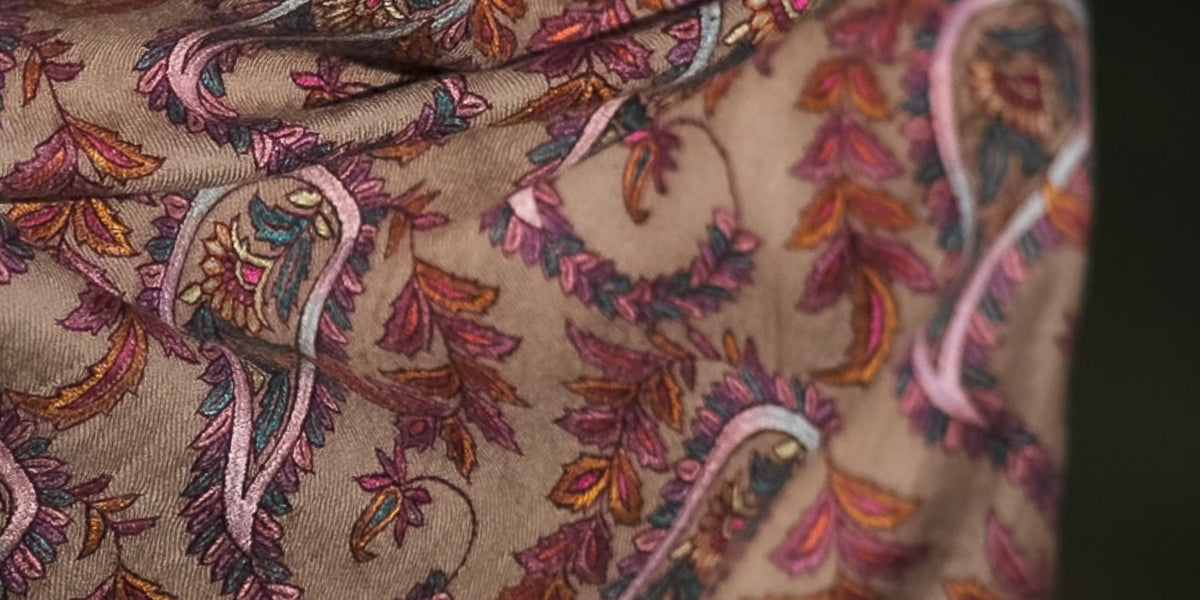
Sozni Embroidery: The Needle That Learned to Paint
There was a time in the middle of the century when a Kashmiri needleworker had an idea that changed his craft forever. His job was repair. He was a rafugar, one of the darners who joined the panels of woven shawls with invisible seams. His name, as the story was recorded from his words in old age, was Ali Baba. He began by touching up the woven patterns of finished shawls with his needle like what he saw and then leaped: why not create the design by needle alone on plain woven cloth using the same fine Pashmina yarn?
The result was a revolution. An embroidered shawl needed a fraction of the time a woven one required and the earliest masters imitated the woven surface faithfully; expert buyers examined pieces closely before they could tell which technique they were holding. In a lifetime, the number of master needleworkers in Kashmir had increased a hundredfold, and the embroidered shawl had become a tradition in its own right along with the woven one. Today that tradition is known as Sozni. Is at the core of the modern Kashmiri shawl art.
A stitch that exists else
Every embroidery tradition in the world has its special way. Kashmiri is a stitch made to achieve something no other stitch tries: to recreate the diagonal grain of twill-woven cloth using thread. It is a delicate stem stitch, supported by an invisible couching thread placed in small, neat rows. The final surface appears like fabric instead of just decoration. The Sozni collection uses a range of darning stitches, satin stitch, stem stitch, knots and couching around this special stitch.
Two habits of the workshop define the Sozni. First, the back is kept as clean as the front: loose threads are cut away rather than carried, so a fine piece shows no floats, no tangle, no shortcut when you turn it over. Second, the work is patient beyond understanding. A densely covered all over piece can take an embroiderer months and the ambitious works for years.
From block to finished shawl
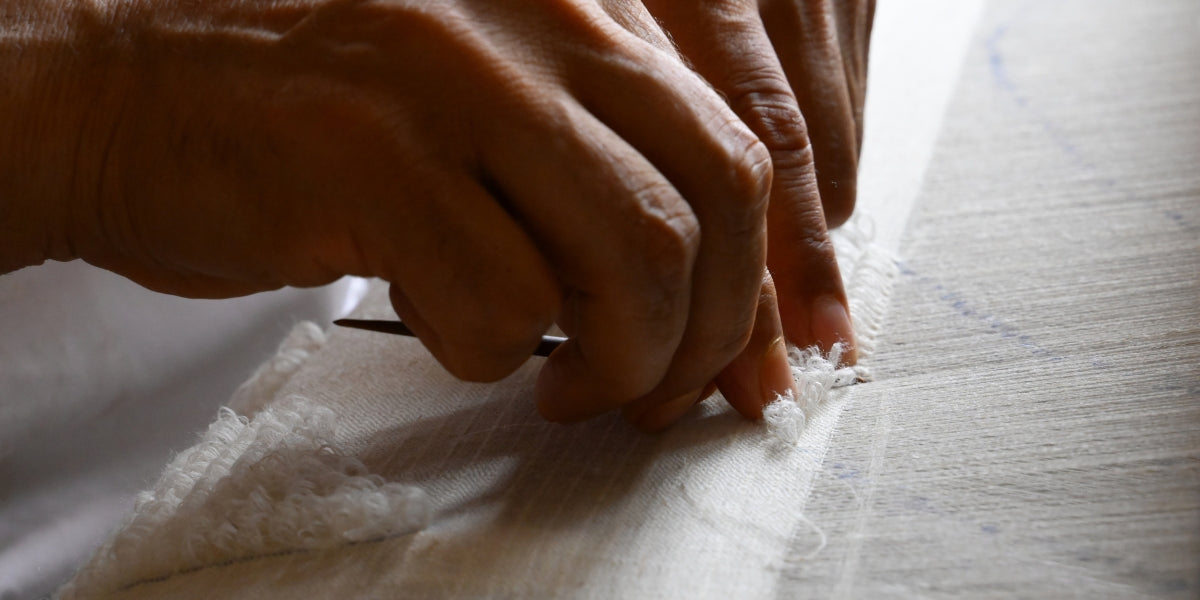
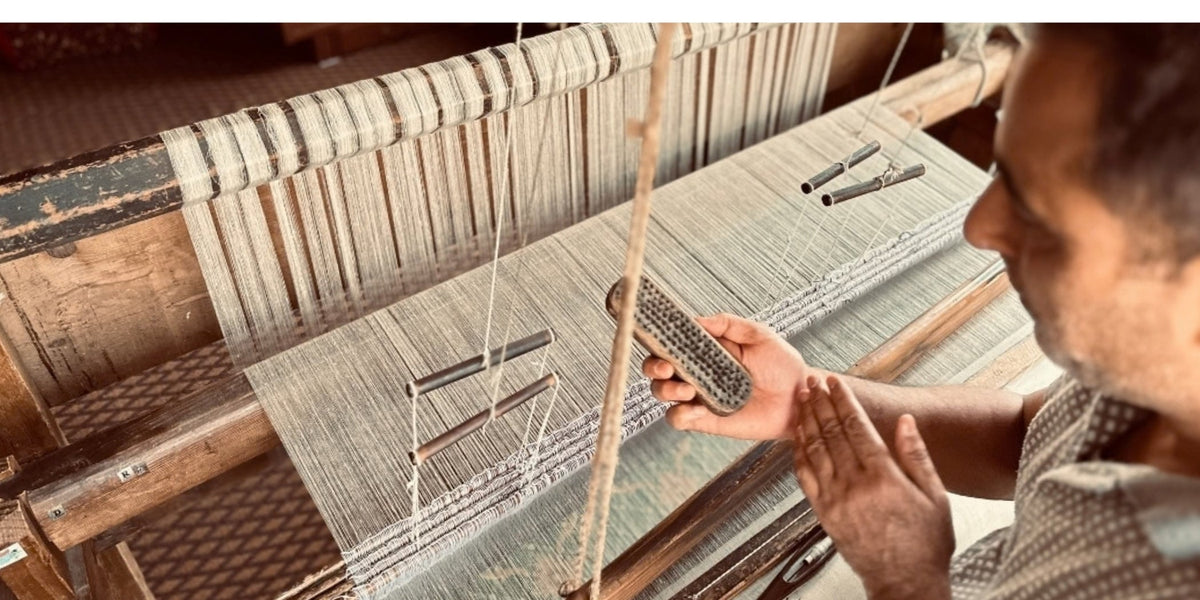
A Sozni shawl begins as an alwan, plain handwoven Pashmina. The design is applied to the cloth from carved walnut wood printing blocks, masterpieces of carving in their own right inked in a color that disappears with the first wash. Historically the outline was transferred by pouncing color through a perforated tracing; the walnut block replaced that method and remains the standard today. The design and color scheme are chosen by the commissioning house. The embroiderer has real judgment about density and detail within those limits and this is why no two fine pieces are ever the same.
The design style extends from the bordered shawl with a field to the open trellis Kashmiris call jaal to the fully covered surface in which the base cloth almost disappears. Floral motifs are descendants of the same garden that produced the buta joined by the chenar leaf of Kashmirs great plane trees.
Why Sozni matters now?
The woven kani shawl slept for a century; the embroidered shawl never did. Through every change in fashion and history Kashmirs embroiderers kept working for the market and the unbroken line of practice means the craft today stands at full strength: thousands of working embroiderers of whom a smaller circle of masters practise the truly fine grade on pure Pashmina. It is exacting, volume, completely manual work and it is the living signature of the valley. When you run a fingertip over the surface of a Veave Lore Sozni shawl and feel the pattern sitting flush with the cloth you are touching the legacy of a rafugars idea from nearly three hundred years ago.
FAQs
What is Sozni embroidery?
Sozni is the hand embroidery tradition of Kashmir worked with needle and Pashmina fine thread on handwoven shawl cloth. Its special stitch imitates the grain of woven fabric and its finest work leaves the reverse almost as clean as the front.
How is Sozni different from Indian embroidery?
Three ways: the kani imitating stitch found in no other tradition the discipline of a clean back with no carried threads and its history as a professional workshop craft on Pashmina rather than a domestic craft on cotton or silk.
How long does a Sozni shawl take to embroider?
A bordered piece may take weeks; a dense over design occupies a master for months; the most elaborate double faced works are measured in years. Time, on the needle is the largest component of the price.
How is the design put onto the shawl before embroidery?
The outline is printed onto the cloth from hand carved walnut wood blocks in a temporary color that washes out completely, leaving only the finished needlework.
Who invented the embroidered Kashmiri shawl?
Tradition, recorded in the 1820s from the craftsman himself credits a Srinagar rafugar named Ali Baba around the 1740s. His innovation grew within decades into a branch of the shawl industry.

Written by Veave Lore

Leave a comment
This site is protected by hCaptcha and the hCaptcha Privacy Policy and Terms of Service apply.