






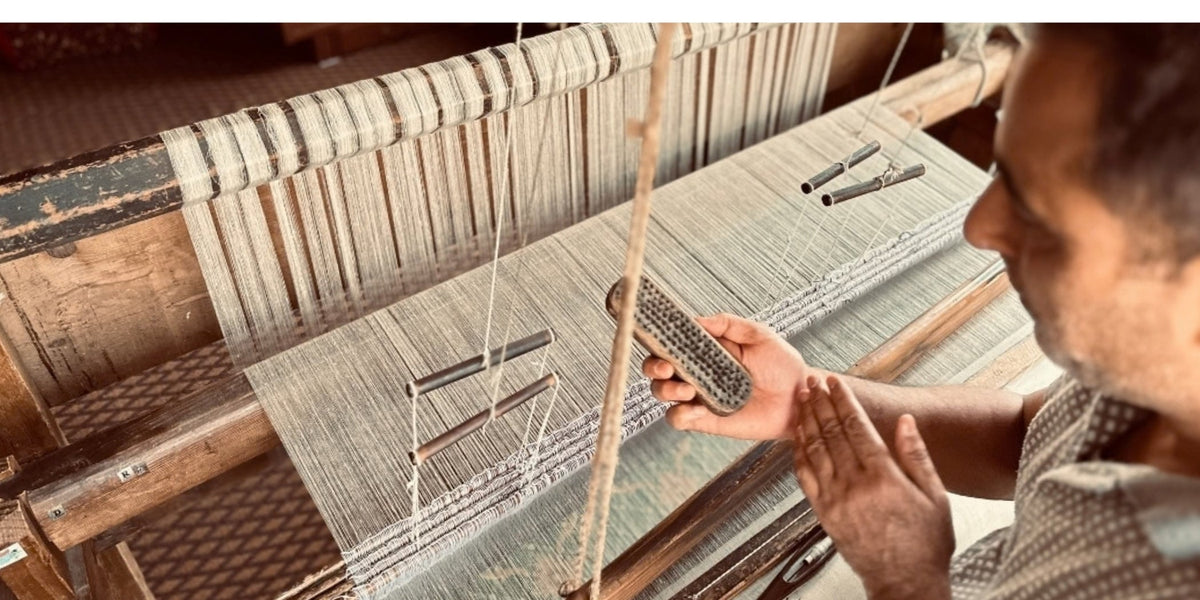
A Shawl for Emperors: The Kashmiri Pashmina in World History
Few things have been desired by so many important people at once. The Kashmiri Pashmina shawl is one of them. For over three centuries, Royal Pashmina shawls traveled along caravan trails and sea lanes as one of Asia's most valuable trade goods. The story of Royal Pashmina shawls is a history of the world told in cloth.
The Mughal Age Was a Time for Royal Pashmina Shawls
It started in the sixteenth century. When Emperor Akbar brought Kashmir into the Mughal Empire in 1586, the Royal Pashmina shawl industry was already well established. Akbar loved the fabric so much he gave it a new name, parm narm, which means supremely soft. He even tried dyeing it in colors and ordered it to be woven in longer lengths to make robes. He set the fashion for wearing Royal Pashmina shawls in his court. His son Jahangir kept the Royal Pashmina shawl cloth for himself and the people he wanted to honor.
The word honor is very important when it comes to Royal Pashmina shawls in India. A ruler would give a khilat, a robe of honor, to bind people to him, and Royal Pashmina shawls were a part of it. Every court in the subcontinent used Royal Pashmina shawls for ceremonies. A Royal Pashmina shawl from Kashmir was never just something to keep you warm. It showed your rank and status.
The Sikh Maharaja Ranjit Singh Loved Royal Pashmina Shawls
Maharaja Ranjit Singh added Kashmir to his empire in 1819. Visitors to his court described it as being full of Royal Pashmina shawls: they were used for garments, canopies, hangings, horse cloths, and even tents. Ranjit Singh paid his officers in Royal Pashmina shawls, and when the British took Lahore, they found rooms full of them. The Royal Pashmina shawl even became part of law. Under the Treaty of Amritsar in 1846, the Maharaja had to give the British government three pairs of Royal Pashmina shawls every year, along with a horse and twelve shawl goats. Queen Victoria received these treaty Royal Pashmina shawls and gave many away as wedding gifts to royal houses in Europe.
Royal Pashmina Shawls Traveled West by Caravan and Sea
They were in royal provisioning by 1544 and in the bazaars of Istanbul by the 1620s and 1630s. Across Iran, the Ottoman lands and Central Asia, people wore Royal Pashmina shawls as turbans or sashes, not draped on their shoulders as in India. The trade that carried Royal Pashmina shawls moved by camel caravan through Bokhara, Meshed, Baghdad and Aleppo, and by ship from Surat to the ports of the Gulf and the Red Sea. In Russia, where winters were very cold, the nobility paid high prices for the most elaborate Royal Pashmina shawls at trade fairs on the Volga.
Josephine and the European Mania
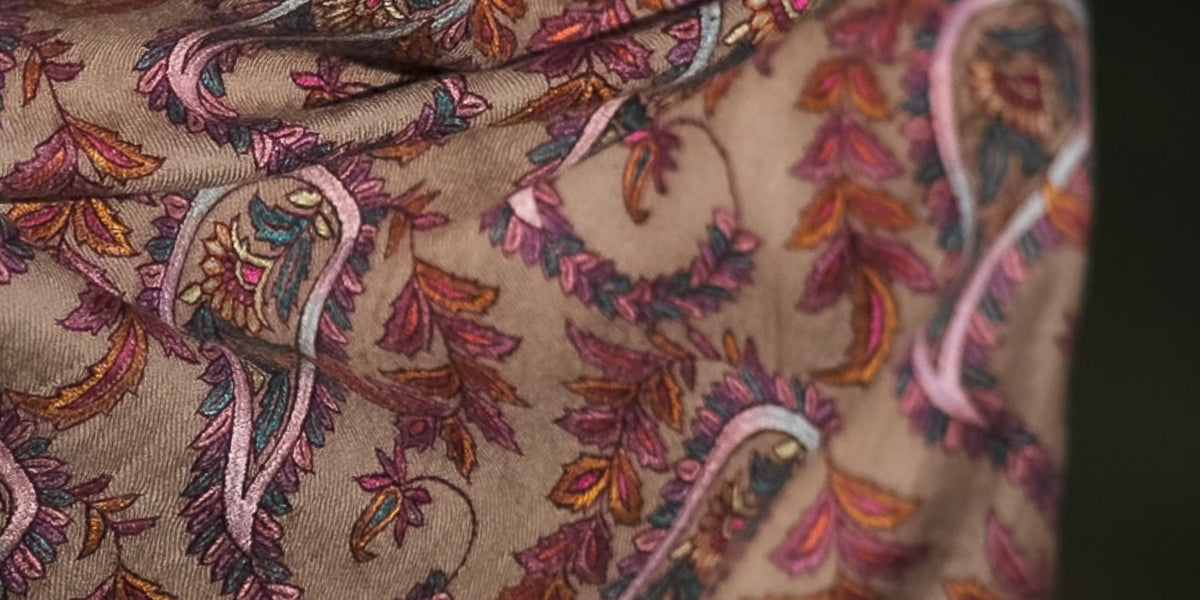
The empress Josephine started the love for Royal Pashmina shawls in Europe at the end of the eighteenth century. Royal Pashmina shawls arrived in Europe with East India Company officials, then in large numbers after Napoleon's Egyptian campaign in 1798, when French officers brought them back for their wives and sisters. Josephine became the patron saint of the fashion; she owned dozens, maybe even hundreds, of Royal Pashmina shawls. For seventy years the Royal Pashmina shawl was the mark of a well-dressed European woman, painted by great portraitists, priced very high, and imitated by every mill from Lyon to Paisley. In 1854 a single Royal Pashmina shawl was made in Srinagar for the empress Eugénie of France, taking nine months of work by thirty craftsmen.
Of course, fashion changes. By the 1880s, the crinoline and the Royal Pashmina shawl had given way to the bustle and the fitted coat, and machine-made imitations had made the look cheaper. The Western market for Royal Pashmina shawls faded. In India, the Royal Pashmina shawl never went out of style because in India it was never just a fashion. It remains part of life: a wedding gift, an heirloom passed to daughters, an honor given to important people.
A Note on Shahtoosh
The rarest shawls were made from the down of the Tibetan antelope, not goat pashmina. To get this down, the animal had to be killed. The demand for it in the twentieth century drove the species toward extinction. Now the trade in shahtoosh is banned worldwide. The finest legal shawl fabric is pure handwoven Royal Pashmina from Kashmir. At Veave Lore, we only work with Royal Pashmina. We think the ban is good for both the antelope and the craft.
The Royal Pashmina shawls worn by emperors were made in the same way, in the same valley, from the same fiber as the Kashmiri Pashmina shawls you can wear today. That is not something we say to sell Royal Pashmina shawls. It is what history tells us.
FAQs
Which famous rulers and leaders of bygone eras were known to wear or grant the khilat?
The Mughal emperors Akbar, Jahangir and Shah Jahan; the Sikh maharaja Ranjit Singh; India's royal courts and the nobility of Persia; the Ottoman Empire; Russia; and in Europe, Empress Josephine, Empress Eugénie of France and Queen Victoria, who received the treaty Royal Pashmina shawls annually.
What exactly is a khilat, and why did it include Royal Pashmina shawls?
A khilat is a robe of honor, a garment presented to a deserving subject by his sovereign as a token of personal favor and an acknowledgment of his status and rank. Royal Pashmina shawls were part of this costume because they were sought-after, luxurious and rare.
How did Royal Pashmina shawls reach Europe before modern transportation?
They were carried from Central Asia by camel and horse caravan through Persia and the Ottoman Empire, and by sea from the Gulf and the Red Sea. From the eighteenth century onward, exports to London and Paris became more direct, with shawls also sold at auction in London.
Is shahtoosh made from the same fiber as Royal Pashmina?
No. Shahtoosh is an expensive, exceptionally warm fiber obtained from the wild Tibetan antelope, and its trade is now banned under international protection. Royal Pashmina comes from the down of the domestic Changthangi goat, which is combed every year.
Why did the Royal Pashmina shawl fall out of Western fashion?
Fashion shifted in the 1870s and 1880s, and cheap, coarse machine-made imitations took over the European market. In India, however, the Royal Pashmina shawl remained as popular as ever.

Written by Veave Lore

Leave a comment
This site is protected by hCaptcha and the hCaptcha Privacy Policy and Terms of Service apply.