






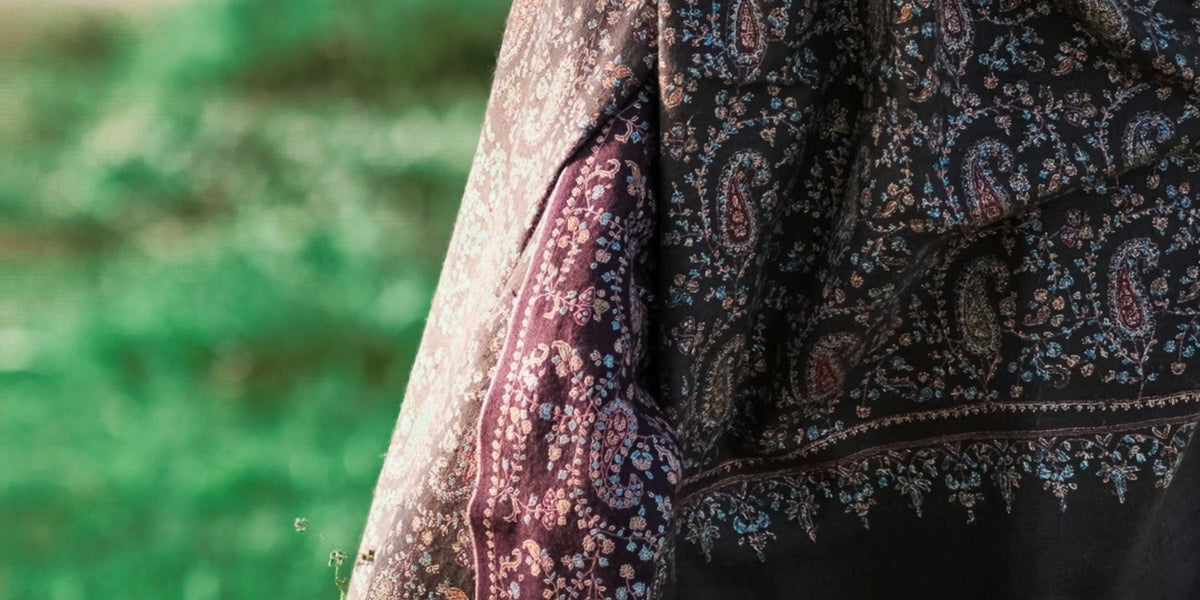
Do-Rukha: The Shawl With No Wrong Side
Every woven or embroidered textile on earth has a wrong side. Flip a brocade and you find floating threads; flip a print and you find a ghost; flip most embroidery and you find the workings. Kashmir looked at that universal fact and decided to abolish it. The result is the do-rukha, literally the two faced shawl: a textile finished so completely that whichever way you throw it over your shoulder, you are wearing the right side.
The idea in the weave
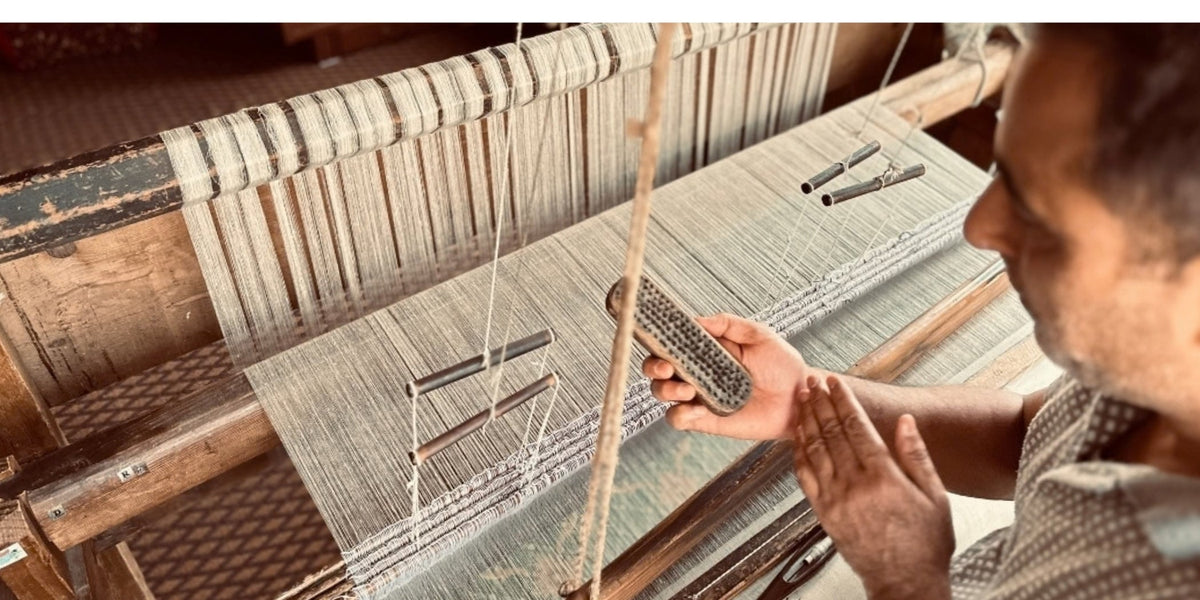
The ambition appeared first at the loom. In the 1860s, at the very summit of the woven shawl's technical history, Kashmiri weavers produced Kani pieces using a slower, more demanding single interlock join at every colour change, eliminating the tiny ridge that normally marks the reverse of tapestry cloth. The fabric that resulted was as perfect on one face as the other. It was also fantastically laborious and inherently delicate, which is why such woven pieces were always rare. But the ideal had been stated: a shawl should be beautiful without a wrong side.
The needle completes it
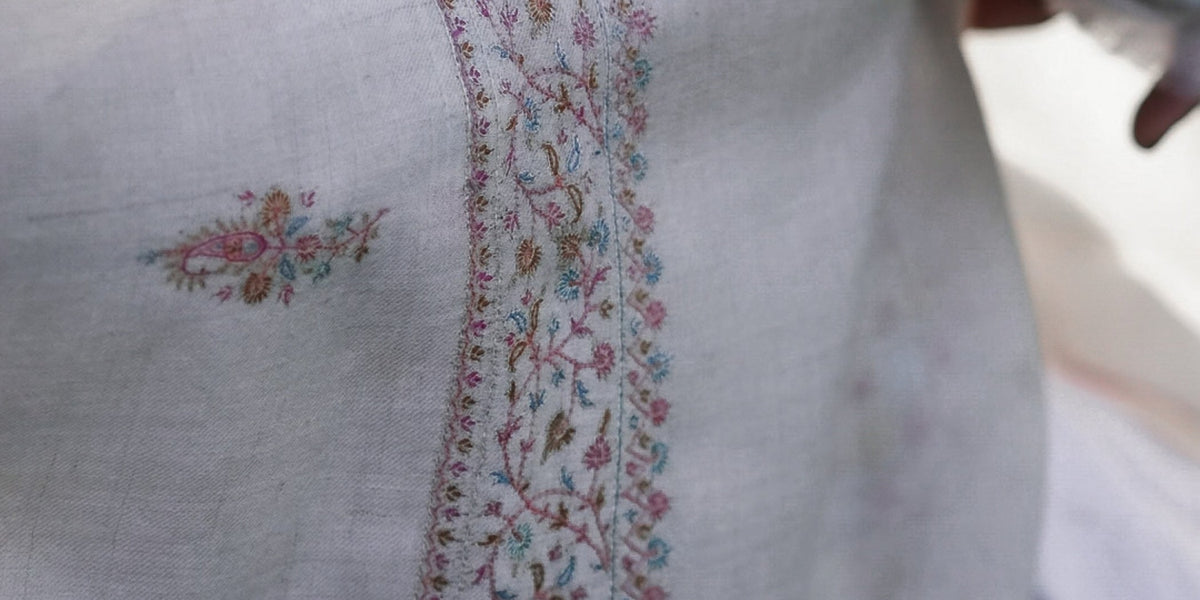
It was the embroiderers who made the ideal repeatable. In do-rukha needlework, the design is finished on both faces of the cloth. In its most virtuoso form, the do-runga or "two colours", the same design is worked on both sides in different colours: a flower worked in crimson on one face is repeated in gold on the other, the two sides perfectly matched. The trick that makes this possible is a clever one: some threads are split lengthwise so that each side can be worked independently.
Contemplate what that requires. The embroiderer is composing two shawls simultaneously in the same threads, planning every stitch for its effect on both surfaces at once. Even within Kashmir, only the most experienced hands attempt it, and observers of the craft have marvelled at the degree of design planning it demands. Do-runga work is still practised in the valley today, both faces worked in a single operation, exactly as in the nineteenth century.
Shop the Kani Pashmina Shawl
A word of honesty about the term
Because the reversible shawl carries such prestige, the word do-rukha is often applied loosely in the market. Two things deserve to be kept distinct. A shawl woven on a two colour ground, handsome as it is, is do-rangi, two coloured cloth, not do-rukha. True do-rukha means the work itself is finished on both faces with no wrong side. At Veave Lore, we use the term only where it is earned, and our reversible pieces are described exactly as what they are, because in a craft this old, precision of language is part of authenticity.
Why collectors prize it
A reversible Pashmina shawl is two shawls in one, offering exceptional value. More importantly, it is a true test of the craftsman's skill. Nothing showcases an artisan's ability better than a piece that invites close inspection of both the front and the back. The do-rukha is the pinnacle of Kashmiri shawl craft, the ultimate achievement for a craftsman proving his worth to the most demanding patrons.
Frequently Asked Questions
What does do-rukha mean?
It is Urdu and Kashmiri for two faced: a shawl finished so completely on both sides that it has no wrong side. The term applies properly to the finish of the work, whether achieved at the loom or by needle.
What is the difference between do-rukha and do-runga?
Do-rukha means both faces are perfect. Do-runga goes further: the identical design appears on the two faces in different colour combinations, a feat achieved by stitches that split the yarn within the cloth rather than passing through it.
Is a shawl with two ground colours automatically do-rukha?
No. Cloth woven with two ground colours is do-rangi, two coloured. True do-rukha refers to work finished on both faces with no reverse. Careful houses keep the two terms strictly apart.
Are reversible Pashmina shawls new?
The ideal dates to the 1860s at the loom, and the double-faced embroidery tradition has been practised continuously since the nineteenth century. Today's do-rukha pieces continue an unbroken lineage.
Why do do-rukha shawls cost more?
Because the artisan is effectively executing two finished surfaces in one fabric, with every stitch planned for both. The time and the level of skill required place such pieces at the summit of the craft.

Written by Veave Lore

Leave a comment
This site is protected by hCaptcha and the hCaptcha Privacy Policy and Terms of Service apply.