






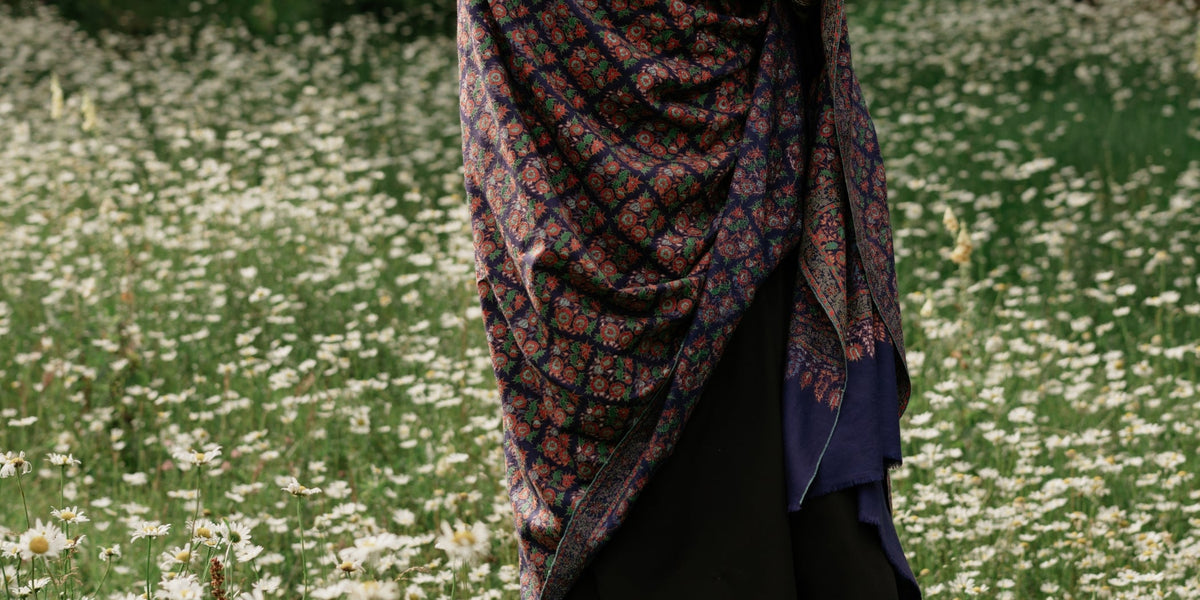
Kalamkari Finds Its Way Onto a Pashmina Shawl
Kalamkari and the needlework of Kashmir developed thousands of miles apart, the former in the temple towns of Andhra Pradesh and the latter in the workshops of Srinagar, and for most of their history they never appeared together on the same piece of cloth. The Kalamkari Pashmina shawl is a more recent idea, adapting one craft to another, and it succeeds because both share the same fundamental instinct: pattern built slowly by an unhurried hand.
What Kalamkari Actually Is
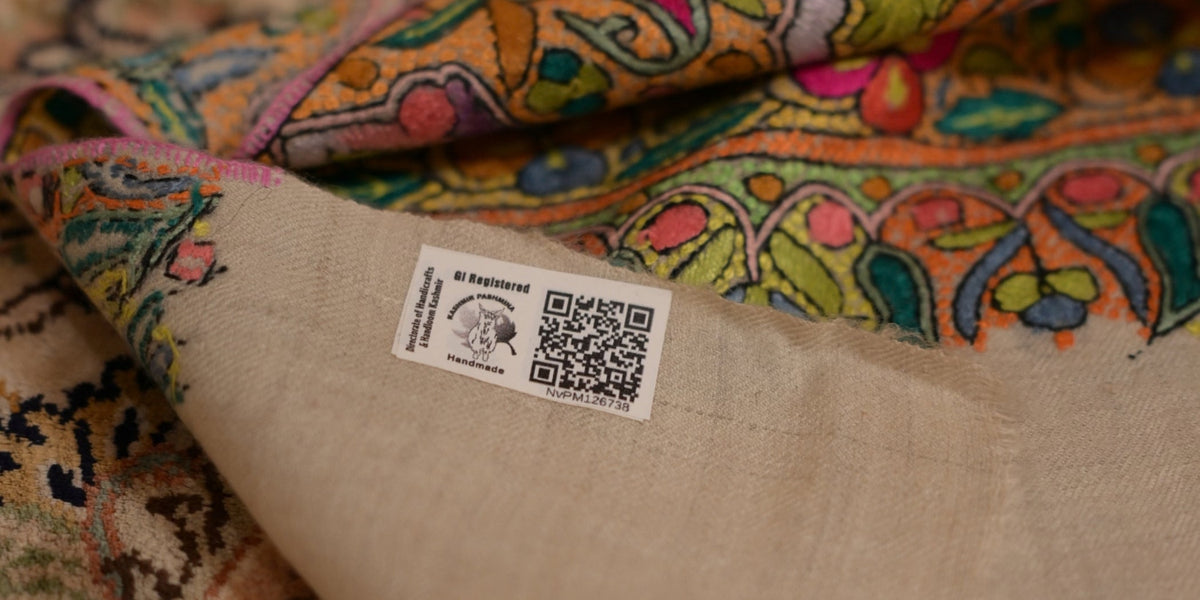
Kalamkari literally means pen work: a method of drawing directly on cloth with a fine bamboo or fibre-tipped pen dipped in natural dye, rather than printing or embroidering the design. On a Pashmina base, the artist first paints the outline of the floral pattern, at the same slow pace that has been followed for centuries on cotton. Once the outline is complete, the piece passes to a needleworker who stitches out parts of the same design in fine Sozni, so that the painted line and the embroidered thread share the same field.
Why It Suits a Pashmina Base Particularly Well
Cotton accepts dye readily and holds a sharp edge, which is one reason Kalamkari has stayed on cotton for so long. Pashmina is harder: the fibre is finer and less absorbent, so a hand-painted Pashmina shawl demands far greater control from the artist than the same design on cotton. When it succeeds, the result is a softness cotton cannot offer, a painted floral field with the warmth and drape of genuine Pashmina beneath it, which is why such pieces sit at the considered end of the shawl range rather than in the everyday section.
Styling a Painted Shawl
Because a Kalamkari shawl is already colourful and detailed, it works best over simple, solid clothing rather than another patterned piece competing for attention. Over a plain kurta or a tailored gown, the shawl becomes the only decorative element in the ensemble, suiting both daytime festive occasions and evening events. Those interested in the needlework should read about how traditional Sozni embroidery is done by hand, as the finishing stitches on a Kalamkari piece rest on the same principles.
| Piece | Price | Link |
|---|---|---|
| Firoza Mist Pashmina Shawl | Rs. 115,000 | View |
| Umber Mural Pashmina Shawl | Rs. 110,000 | View |
| Shabnam Whisper Pashmina Shawl | Rs. 54,000 | View |
| Khurshid Lace Pashmina Shawl | Rs. 54,000 | View |
FAQs
What does Kalamkari mean?
Pen work: hand painting a design onto cloth with a fine pen and natural dye, rather than printing or embroidering it.
Is a Kalamkari Pashmina shawl painted, embroidered, or both?
Often both. The floral outline is first painted by hand, then parts of the same design are raised in fine Sozni needlework, so the painted line and the embroidered thread sit together on the shawl.
Is Kalamkari originally a Kashmiri craft?
No. Kalamkari comes from Andhra Pradesh and has traditionally been worked on cotton; its use on Pashmina is a more recent meeting of two distinct Indian textile traditions.
How should you style a Kalamkari Pashmina shawl?
Over simple, solid garments, since the painted field already carries most of the visual impact; another pattern underneath tends to compete with it rather than enhance it.
Does a painted shawl need different care from an embroidered one?
A Kalamkari Pashmina shawl should be dry cleaned only. Because of the natural dyes and the delicacy of Pashmina, washing in water or ironing at high heat can damage both the painted motifs and the fine Sozni work.

Written by Veave Lore


Leave a comment
This site is protected by hCaptcha and the hCaptcha Privacy Policy and Terms of Service apply.