






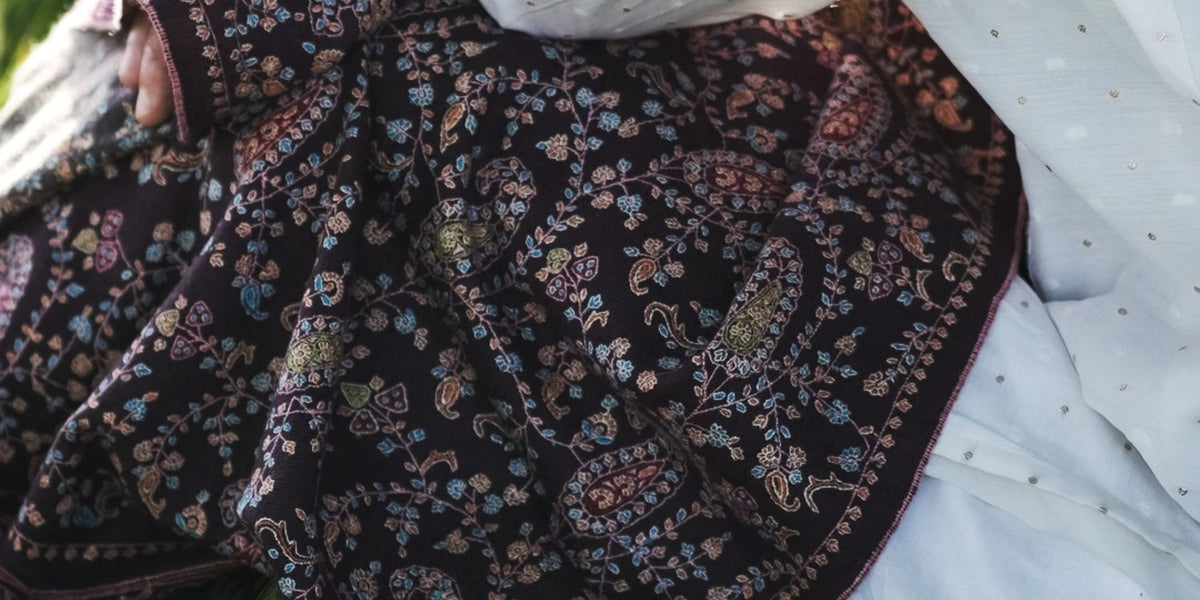
The Hands Behind the Heirloom: Honouring Kashmir's Weavers
Every account of the Kashmir shawl lists its admirers: emperors, maharajas, empresses. This one is about its makers. The historical record of the shawl's golden century preserves the names of rulers and merchants in abundance and the names of weavers rarely, and yet it was the weavers who built everything the world admired. A heritage house owes them more than a mention. It owes them the truth of their story, because that truth is the strongest argument for how the craft deserves to be treated now.
The paradox of the golden age
Here is the uncomfortable fact at the heart of the shawl's history: the period when the craft reached its greatest artistic heights, the nineteenth century, was also the period when its workers were most exploited. Successive governments taxed the industry ferociously, at rates that climbed to a quarter of a shawl's value and beyond, stamped on every piece at the loom by a dedicated tax office. The loom owners, squeezed from above, squeezed in turn, holding weavers in permanent debt, paying wages that observers of the day recorded with disbelief. A weaver was legally bound to his loom, unable to leave the trade or the valley, in a condition contemporaries compared frankly to serfdom. His working day ran from morning to sunset in crowded, unventilated rooms, and the toll on health was so visible that travellers remarked they had never seen an old shawl weaver.
Some fled anyway, over unguarded high passes to the Punjab, leaving families behind, and it was recorded as remarkable that money they sent home through returning traders was always faithfully delivered. Some, in desperation, maimed their own hands to escape the loom. And three times, in 1847, 1853, and 1865, the weavers rose and struck for better terms; the last of those protests was put down by force. When European demand collapsed in the 1870s and 1880s, a workforce given so little reason for loyalty had none to give, and the great industry fell with astonishing speed.
What the record still shows
Yet read the same sources against the grain and a different picture also emerges: of staggering skill and unbroken pride. These were the hands that held thread counts rivalling fine silk, that executed the talim's code without error through designs of staggering density, that produced the objects Europe's finest mills admitted they could not equal. The embroiderers, spinners, darners, and dyers around the loom fared somewhat better than the weavers, and their crafts never stopped; the spinning wheel and the needle carried the whole tradition through the century when the loom fell silent. And when Kani weaving died commercially, it was weaving families themselves, expecting no reward, who kept teaching it to their sons until the world wanted it again. People treated as the least of the industry proved to be its most faithful guardians.
Why this history matters when you buy
We tell this story for a practical reason. The lesson of the nineteenth century is that a craft is only as durable as the dignity of its craftspeople, and that lesson is written into how serious houses work today. In our workshops, the relationship between house and artisan is the old partnership restored to what it should have been: skilled professionals, properly paid, named and honoured for work that no machine on earth can do, many of them carrying family lineages in the craft that reach back through the very history told here. The premium on a genuine handwoven Pashmina is not a brand tax. It is the wage of mastery, and after the history you have just read, we hope it reads differently.
The emperors got the portraits. The weavers get the last word: everything you love about this craft, they made.
Frequently Asked Questions
Who actually made the great Kashmir shawls of history?
Professional artisans of the valley: spinners (almost all women), dyers, warp makers, weavers, designers, darners, and embroiderers, organised around workshops. Their individual names went mostly unrecorded, unlike those of the rulers who wore their work.
Were the old shawl weavers fairly treated?
No. In the nineteenth century they were heavily taxed, poorly paid, bound to their looms, and prevented from leaving the trade. Their protests in 1847, 1853, and 1865 won no lasting relief, and the last was put down by force. It is a history the craft should own honestly.
Did the craft survive because of or despite that treatment?
Despite it. When the market collapsed, it was the artisan families themselves, notably the Kani weaving households of Srinagar, who preserved the skills without reward until demand returned generations later.
How are Pashmina artisans engaged today?
As skilled professionals whose labour is the largest component of a genuine shawl's cost. At Veave Lore, artisans are long term partners of the house, many from hereditary craft lineages, and their pay reflects the months a fine piece demands.
Why does an authentic Pashmina shawl cost more than a machine made wrap?
Because you are paying people, not machinery: weeks to months of skilled human work by spinners, weavers, and embroiderers whose crafts cannot be automated. The price is the artisan's livelihood made visible.

Written by Veave Lore

Leave a comment
This site is protected by hCaptcha and the hCaptcha Privacy Policy and Terms of Service apply.