







The Kani Pashmina Saree Brings Kashmir's Weave to the Six Yards
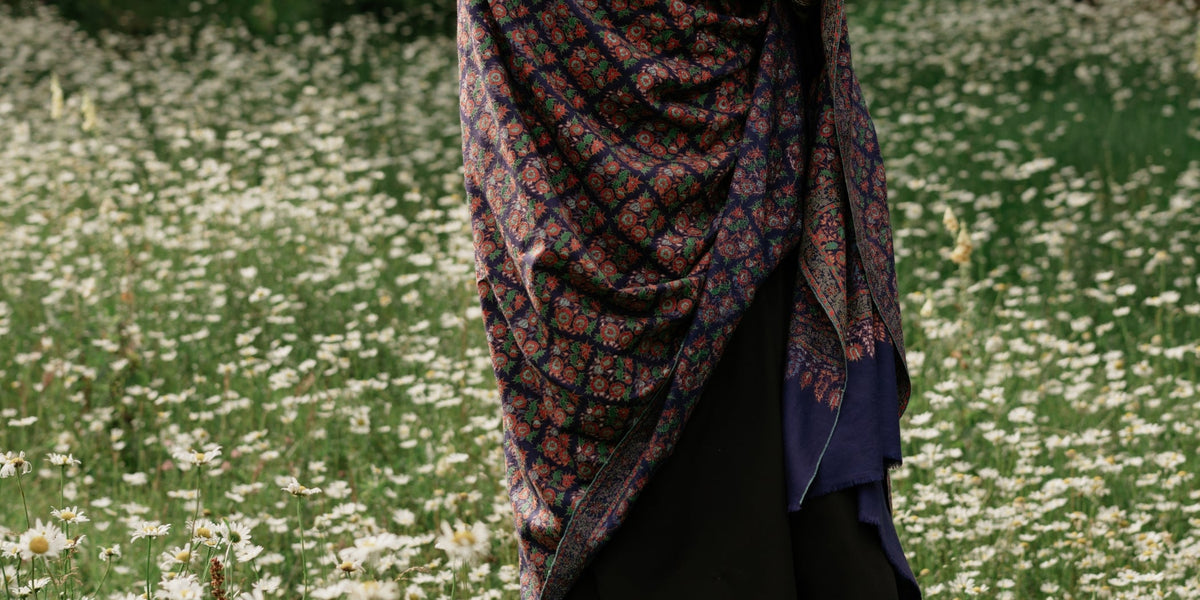
At its essence, a shawl and a saree are the same idea applied to different lengths: both are a single piece of cloth worn without being cut or stitched into shape, and in both cases the quality of the weave is entirely responsible for their effect. It was only a matter of time before the weavers of Kashmir applied the skill behind the two-yard Kani shawl to a six-yard length, and the result was the Kani Pashmina saree.
What Makes a Kani Saree Different from a Printed One
The vast majority of sarees marketed as Pashmina are printed or digitally designed to resemble woven ones, since true Kani weaving is slow and costly across the length of a saree. In a traditionally woven Pashmina silk saree, the pattern is built into the fabric itself, bobbin by bobbin, exactly as in a Kani shawl, so the design reads the same whether you look at the front of the drape or the reverse of the pallu. Held up to the light, a woven saree shows faint ridges where the colours change, whereas a printed one has a smooth, even surface with no texture, however sharp the pattern may look from afar.
Why This Saree Suits the Wedding Season
This kind of saree sits between a silk drape and a woollen wrap: warm enough for an evening event in October or November without the rigidity of heavier bridal silks. Because the base is Pashmina rather than pure silk, it has a soft drape that catches the light gently rather than sharply, suiting both daytime and evening ceremonies across the long wedding season. Paired with a fitted blouse and simple jewellery, a Pashmina saree looks considered rather than borrowed from a shawl collection, because its weight and drape are designed for this length.
How to Wear and Care for It
Pleat it a little more loosely than a stiff silk saree, since Pashmina hangs rather than stands, and let the pallu move rather than pressing it flat. The fabric is the same fine, delicate fibre used in every Kashmiri Pashmina shawl in the house and needs the same care: dry cleaning by someone experienced with handwoven wool, and storage folded loosely rather than hung, as hanging can pull the weave out of shape over time.
Currently in the Collection
| Piece | Price | Link |
|---|---|---|
| Nginavat Kani Pashmina Saree, Twilight Blue | Rs. 135,000 | View |
FAQs
What is a Kani Pashmina saree?
A saree woven on a traditional Kashmiri loom using the same bobbin-built technique as a Kani shawl, rather than printed or embroidered afterwards, so the pattern is part of the cloth itself.
How is a woven Pashmina saree different from a printed one?
A woven saree shows the same pattern and slight texture on both sides of the cloth, with faint ridges at each colour change. A printed saree carries its pattern on the surface only, with no texture and often a slightly different look on the reverse.
Will a Pashmina saree be warm enough for a winter wedding?
Yes. Pashmina insulates better than an equivalent weight of silk, making it a comfortable choice for outdoor or evening events once the weather turns cool.
How should a Pashmina saree be draped compared with a silk saree?
Keep the pleats a little looser, because the fabric flows rather than holding a crisp shape the way stiffer silk does, and let the pallu fall with natural movement rather than fixing it flat.
How should a Pashmina saree be cared for after a function?
Have it dry cleaned by someone experienced with handwoven wool rather than ordinary silk sarees, and store it folded loosely rather than on a hanger, so its weight does not distort the weave.

Written by Veave Lore


Leave a comment
This site is protected by hCaptcha and the hCaptcha Privacy Policy and Terms of Service apply.