






Sixty Colours from a Handful of Plants: The Natural Dyes of Kashmir
Take out a Kashmir shawl woven two and a half centuries ago, in the candlelit workshops of the 1700s, and the first shock is not the design. It is the colour. The roses still glow, the indigos still hold their depth, the greens have not turned. Modern laboratory analysis of threads from seventeenth- and eighteenth-century shawls confirmed what the eye suspects and then revealed something astonishing about how it was done: the entire luminous palette of the classic coloured shawls was built from only five or six dye substances. Everything else was knowledge.
The Dyer's Secret Arithmetic
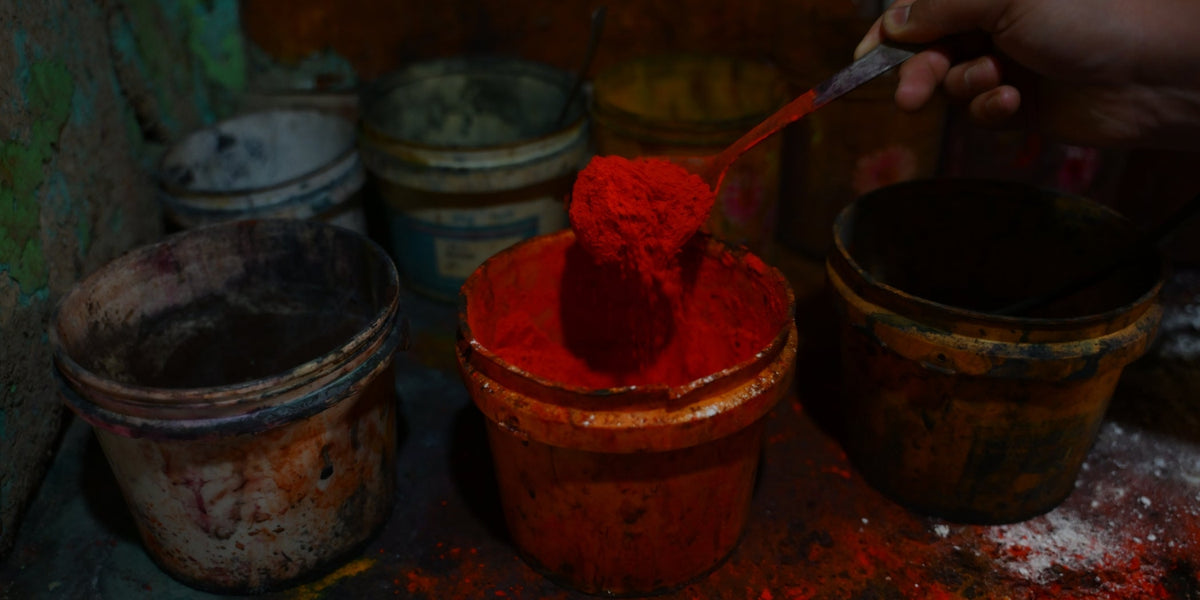
Dyeing in old Kashmir was a hereditary calling, and famously a secretive one; nineteenth century visitors recorded that the dyers kept their methods strictly within the family and admitted no outsiders. What the record and the surviving cloth together reveal is a system of controlled combination: a small set of dyestuffs, varied in strength and layered one over another, yielding a spectrum that contemporary observers counted at sixty four distinct, fast colours. The core materials were few and precious. Indigo gave the blues, from washed sky to near black. The reds and pinks, every one of them in the analysed early shawls, came from lac, the deep crimson of an insect resin, with kermes, another insect dye, alongside; dark reds and violets were achieved by underlaying lac with indigo in measured proportions. Safflower gave yellows, saffron an extravagant yellow for the costliest pieces, iron liquor the blacks, and duller reds came from logwood. One touching detail from the accounts of the 1820s: certain blue greens were obtained by importing English broadcloth and boiling the dye back out of it, a piece of resourcefulness that says everything about the valley's determination to command every shade.
The wonder is not the list of materials, which many dyeing cultures shared. It is the discipline: five substances, sixty four colours, and a fastness that has now outlived every empire that wore the results.
The Chemical Interruption
In the later nineteenth century the first synthetic aniline dyes reached the valley, and some manufacturers adopted them for their cheapness and convenience. The record of what followed is instructive. The new colours were judged harsh against the old palette, a particular magenta earning special contempt, and the French buying agents then stationed in Srinagar refused outright to accept shawls dyed with them, for a time stamping the practice out. Even at the industry's lowest commercial ebb the standard held remarkably long: an account from as late as 1963 records natural dyeing still in use for Pashmina, naming safflower, madder, turmeric, and indigo, with black still drawn from iron liquor as it had been for centuries.
The Palette Today
Contemporary dye houses work mostly with dependable modern colours, whose fastness and consistency the old masters would have respected, and standardised natural dyes remain available for clients who request them. What has never changed is the sensibility. The classic Kashmiri palette, saturated but never garish, deep but never dull, was formed by those five patient substances, and it still governs the colour judgement of the valley's craft. When a Veave Lore piece is dyed, the question asked of every shade is the old one: will this colour still be worth looking at in a hundred years? The shawls of the 1700s set that standard. We see no reason to lower it.
Frequently Asked Questions
What natural dyes were used in classic Kashmir shawls?
Chiefly indigo for blues, lac and kermes for reds and pinks, safflower (and occasionally saffron) for yellows, logwood for duller reds, and iron liquor for black. Analysis of early shawls found the whole palette built from five or six substances.
How did so few dyes produce so many colours?
By varying the strength of each dyebath and layering one dye over another in controlled proportions. Nineteenth century sources counted sixty four distinct fast colours in the dyers' repertoire.
Do the old colours really last?
Yes. Shawls surviving from the seventeenth and eighteenth centuries retain vivid, subtle colour today, which is itself the best testimony to the fastness of the traditional dyes and the skill of their users.
When did synthetic dyes arrive in Kashmir?
In the later nineteenth century. Their early harshness was resisted, most effectively by French buying agents who refused shawls dyed with them, and natural dyeing persisted in the valley well into the twentieth century.
Can I order a naturally dyed Pashmina today?
Yes. Most contemporary dyeing uses reliable modern colours, but standardised natural dyes are available on request, and the traditional palette remains the reference for the house's colour judgement.

Written by Veave Lore

Leave a comment
This site is protected by hCaptcha and the hCaptcha Privacy Policy and Terms of Service apply.