






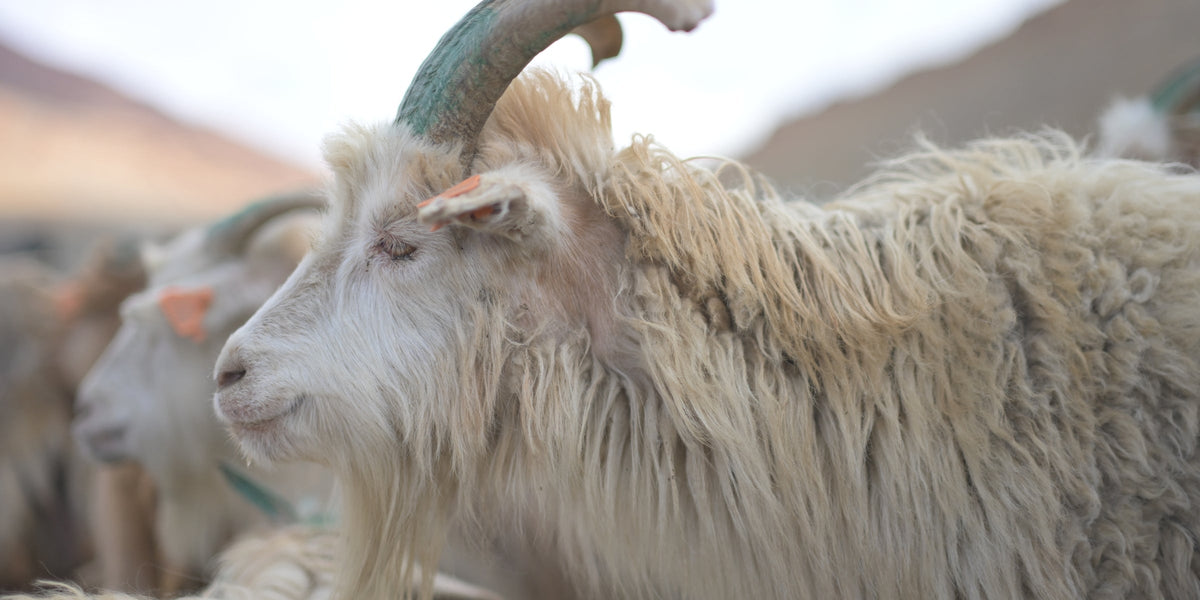
The Changpa: Guardians of the Pashmina Goat
Walk through any serious collection of Kashmiri textiles, or through the Veave Lore catalogue, and you will meet a family of recurring names: doshala, rumal, jamawar, khat-rast, chand-dar. These are not decorative labels. Each names a distinct form with its own proportions, its own design logic, and its own history of use. Knowing them transforms how you look at a shawl. Here is the family, introduced properly.
The Anatomy Every Form Shares
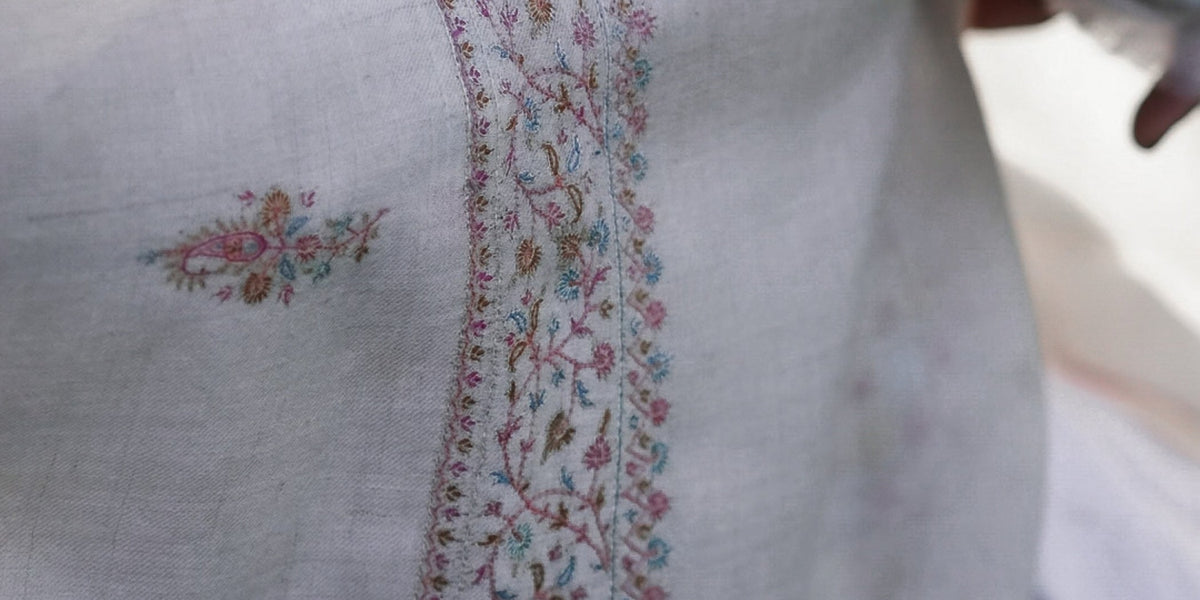
First, the map of a classic long shawl. The plain or patterned expanse at the centre is the field. Down the two long edges run the vertical borders. At each end, framed above and below by narrow horizontal borders, sits the shawl's crowning feature: the decorated end panel carrying the principal motifs.
For roughly the first hundred years of the surviving record, the classic formula was purity itself: a plain field, slender borders, and rows of flowering butas standing across each end panel. The following century filled the field, swelled the borders, and elaborated the motifs, but the underlying anatomy never changed, and you can read it on shawls woven this year.
Doshala: The Long Shoulder Mantle
The word means two shawls, and it preserves a practical elegance of the old workshops: the finest long shawls were woven in identical pairs, which could be stitched back to back so that no reverse was ever seen in wear. The doshala is the form the world pictures when it hears the words Kashmir shawl: the long rectangle draped over the shoulders, the form painted on Mughal courtiers and European empresses alike, and the direct ancestor of the full size Pashmina shawl of today, which in our workshops measures roughly two metres by one.
Rumal: The Square, and the Moon Within It
The rumal is the square shawl, historically favoured for women's wear and folded on the diagonal. Its most celebrated design is the chand-dar, the moon shawl: a single medallion at the centre of the field, echoed by quarter medallions at the four corners. It is among the most instantly recognisable formats in all of textile history, and squares and their moon designs continue to be made and collected today.
Shop the Highland Fold Checked Pashmina Shawl for Women
Jamawar: The Garment Length
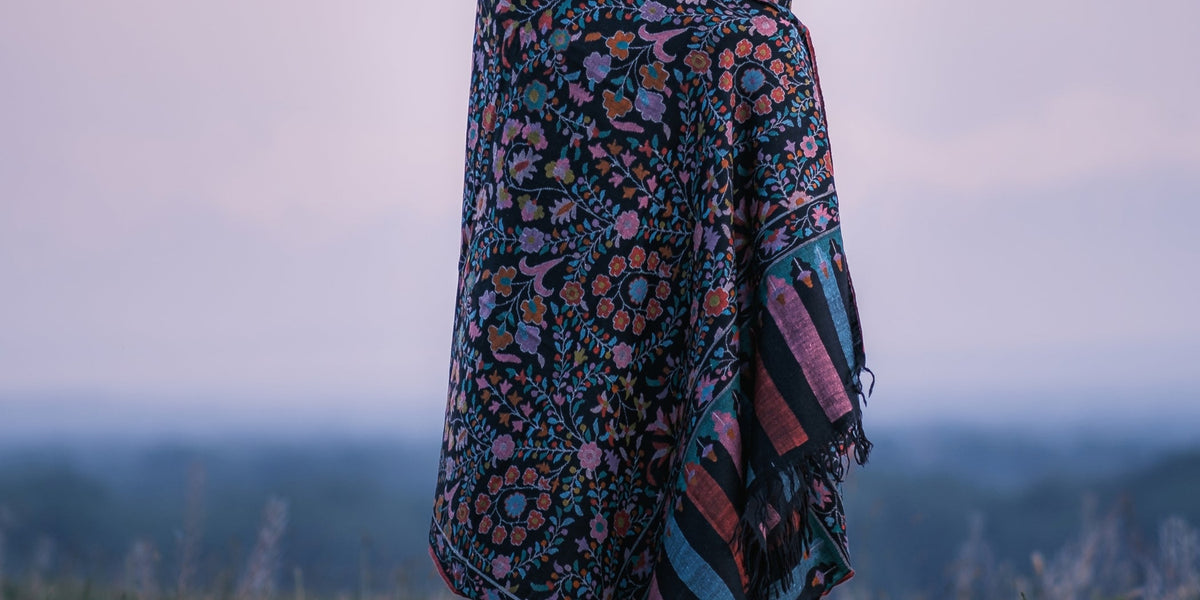
Jamawar means, literally, material for a garment. Where the doshala builds toward its end panels, the jamawar dispenses with them entirely: its beauty is an all over design running edge to edge, made to be tailored into robes and coats for the courts of India and Iran, or simply draped as it came. Its patterns favoured repeating butis, flowing floral networks, and above all khat-rast, the striped style in which patterned bands of alternating colour run the length of the cloth. Because a jamawar's design was continuous, it could also be worn exactly like a shoulder mantle, and often was. The name today rightly signals the most densely patterned, most formal register of Kashmiri design, and it anchors its own collection at Veave Lore.
Patka: The Sash of Princes
One classic form has left the wardrobe but not the story. The patka was the long narrow sash of the Indian nobleman, wound about the waist with its two patterned ends hanging in front. In the seventeenth and eighteenth centuries, the sash in fine Kani Pashmina was among the industry's proudest products, and surviving examples preserve some of the purest early design in existence. The form faded as court dress changed in the nineteenth century, but its design vocabulary flowed directly into the shawls that followed.
Reading a Shawl Like a Collector
With the family in mind, a shawl introduces itself at a glance. Long rectangle with crowned end panels: the doshala lineage. Square with a central moon: chand-dar rumal. Continuous all over pattern with no end panels: jamawar. Patterned stripes running the length: khat-rast. And across all of them, the same grammar of field, border, and end panel that Kashmiri designers have spoken fluently for more than three centuries. Learn the grammar once, and every shawl you meet afterwards begins to talk.
Frequently Asked Questions
What is a jamawar shawl?
Jamawar means garment material: cloth patterned all over, edge to edge, without the decorated end panels of a classic long shawl. Historically tailored into robes, it is worn today as the most formal, densely designed class of Kashmiri shawl.
What does doshala mean?
Literally two shawls. The finest long shawls were woven in identical pairs that could be stitched back to back to hide the reverse. The word came to mean the classic long shoulder mantle itself.
What is a moon shawl?
The chand-dar, a square shawl bearing a central medallion with quarter medallions in the four corners. It is the signature design of the square rumal format from the eighteenth century onward.
What is khat-rast?
The striped style of Kashmiri design: bands of alternating colour, each carrying its own small floral pattern, running the length of the cloth. It belongs especially to the jamawar tradition.
What size is a classic Pashmina shawl today?
The full shawl of today descends from the doshala and measures roughly two metres by one metre, with stoles cut narrower. Squares and other formats continue alongside it.

Written by Veave Lore

Leave a comment
This site is protected by hCaptcha and the hCaptcha Privacy Policy and Terms of Service apply.