







Pashmina in Fashion: From Empress to Runway
An earlier chapter of this journal left the Kashmir shawl at the end of its first great romance with the West, set aside by around 1870 as skirts changed shape and fashion moved on to other things. That was not the end of the story. It was only a long quiet interval, and the craft that had once dressed empresses spent the better part of a century waiting to be noticed again.
The Quiet Interval
As European fashion abandoned the wide shawl for narrower silhouettes, the market that had sustained thousands of Kashmiri weavers for decades shrank sharply, and cheaper machine-made imitations from European mills filled much of what demand remained. Kashmir's artisans did not disappear. Production shifted toward domestic markets, gifts, and smaller commissions, and the finest hand skills survived within families even as the world's fashion pages stopped writing about them. For most of the early and mid twentieth century, the Kashmir shawl was a craft kept alive by habit and devotion rather than by international attention.
The Nineteen Nineties Revival
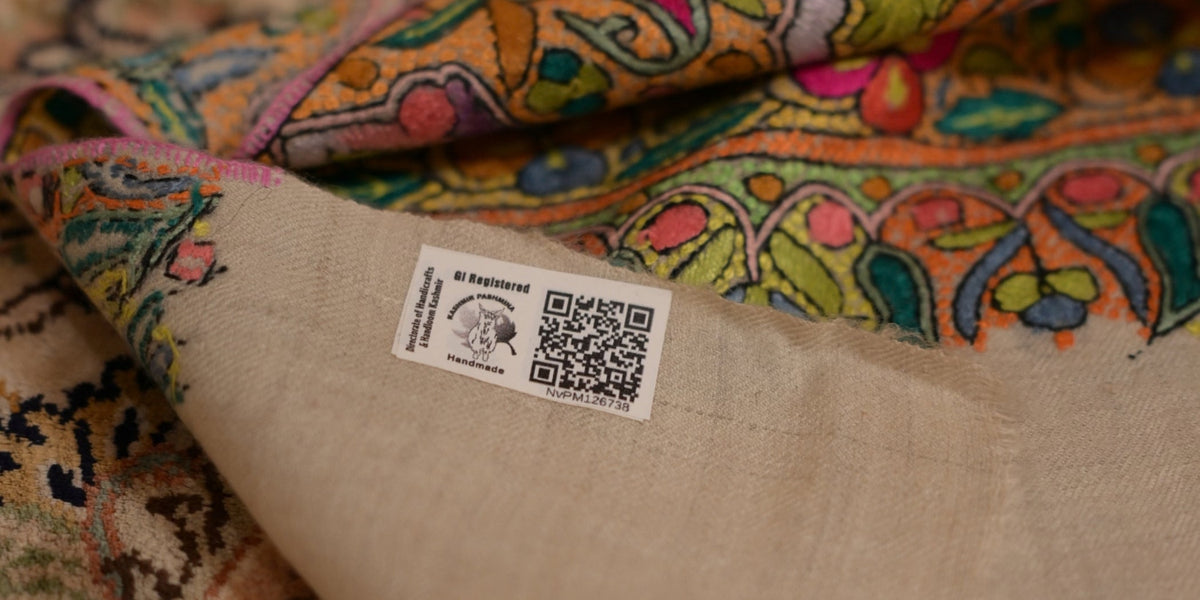
Attention returned from an unexpected direction. During the 1990s the Pashmina shawl became one of the most characteristic accessories in Western fashion, worn over evening gowns and thrown over the shoulders at daytime functions, and for the first time in a century stocked by department stores and boutiques under its own name. The term pashmina, once known mainly to experts and collectors, became so common that people who had never heard of Kashmir could describe precisely what a pashmina wrap looked like. Demand soon exceeded supply, and the market filled not only with the real thing but with blends and imitations, a problem the craft is still working to resolve through certification and honest labelling today.
Red Carpets and Runways
That visibility has been maintained. Designer Pashmina wraps are frequently seen at film festivals and award events, draped over dresses to provide warmth without disrupting the line of the gown, a practical remedy that also looks effortless in photographs. Designers in India and abroad still draw on the weaving and embroidery traditions of Kashmir for both couture and ready-to-wear, at times using Kani or Sozni work directly and at other times adopting motifs such as the buta, which Kashmir gave the world two centuries ago. The craft that once adorned portraits is now just as readily found on the runway.
What Changed and What Did Not
Fashion has since moved past the trend of the nineteen nineties, as it eventually does with all things, but Pashmina has not returned to obscurity as the first phase might have implied. One explanation lies in the present-day desire for slower, more genuine fashion, in which clothes are valued for the way they are made rather than for how easily they can be replaced. A shawl made by hand from fibre combed only once a year matches that mood naturally, without having to alter itself in any way to remain fashionable.
Frequently Asked Questions
When did Pashmina become popular in Western fashion?
There was an initial surge in the nineteenth century that had largely faded by about 1870, followed by a strong comeback in the 1990s, when it became a defining accessory in Western fashion.
Why did Kashmir shawls fall out of fashion in the early twentieth century?
European silhouettes changed and demand for wide shawls fell, while cheaper machine-made shawls from European factories took over most of the market that was left, confining genuine Kashmiri shawls mostly to smaller, domestic markets.
Is Pashmina a passing fashion or a lasting classic today?
It has settled into a lasting classic. The 1990s craze ran its course like any trend, but continued interest in real handcraft and slower fashion has kept Pashmina relevant long past that moment.
Do modern designers still use handwoven Kani or embroidered Pashmina?
Yes. Designers in India and abroad still use Kani weaving, Sozni embroidery, and motifs such as the buta in their couture and ready-to-wear lines.
Why has Pashmina lasted when so many fashion trends have not?
Its appeal rests on genuine craftsmanship rather than novelty, and that kind of value does not expire the way a seasonal style does.

Written by Veave Lore


Leave a comment
This site is protected by hCaptcha and the hCaptcha Privacy Policy and Terms of Service apply.