
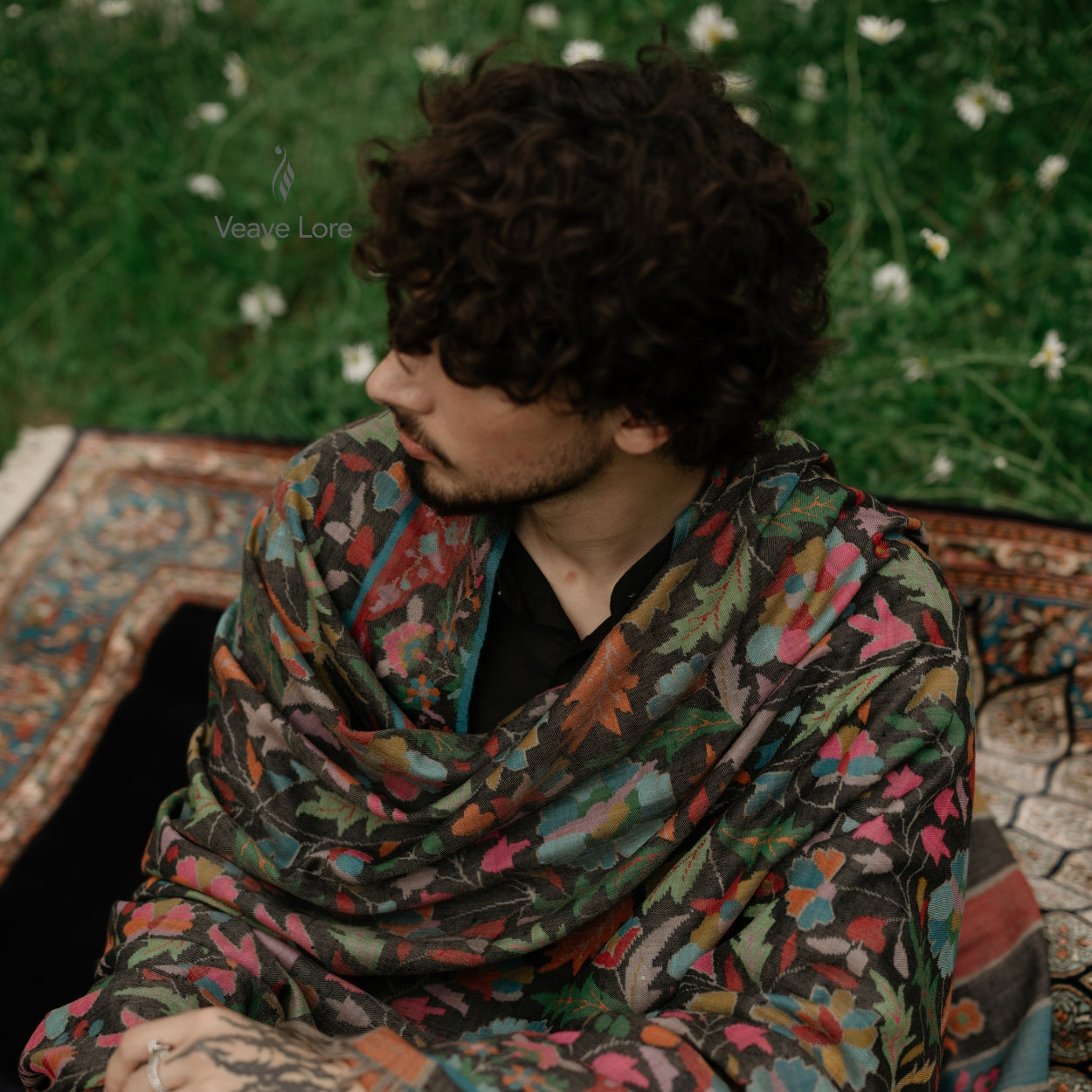
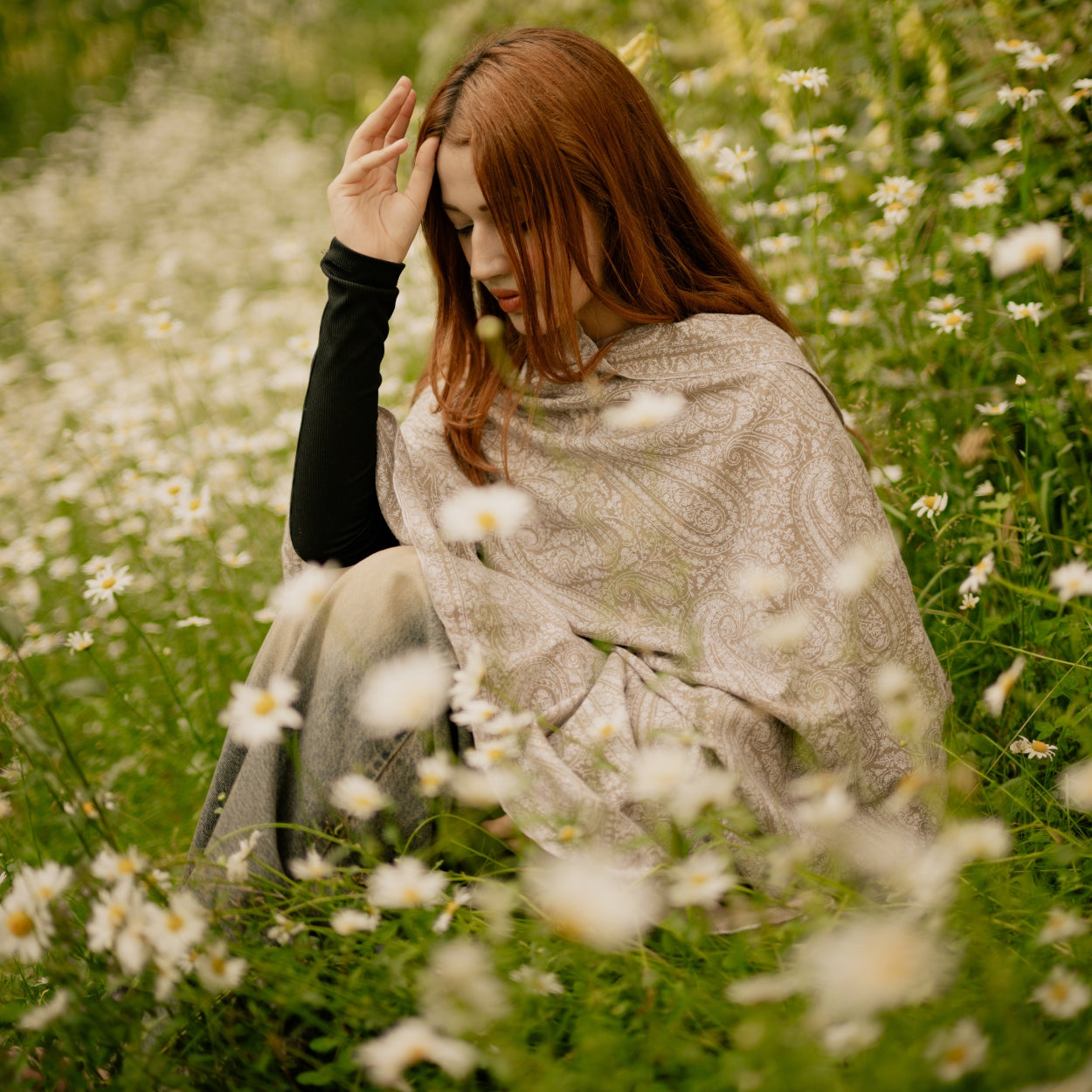
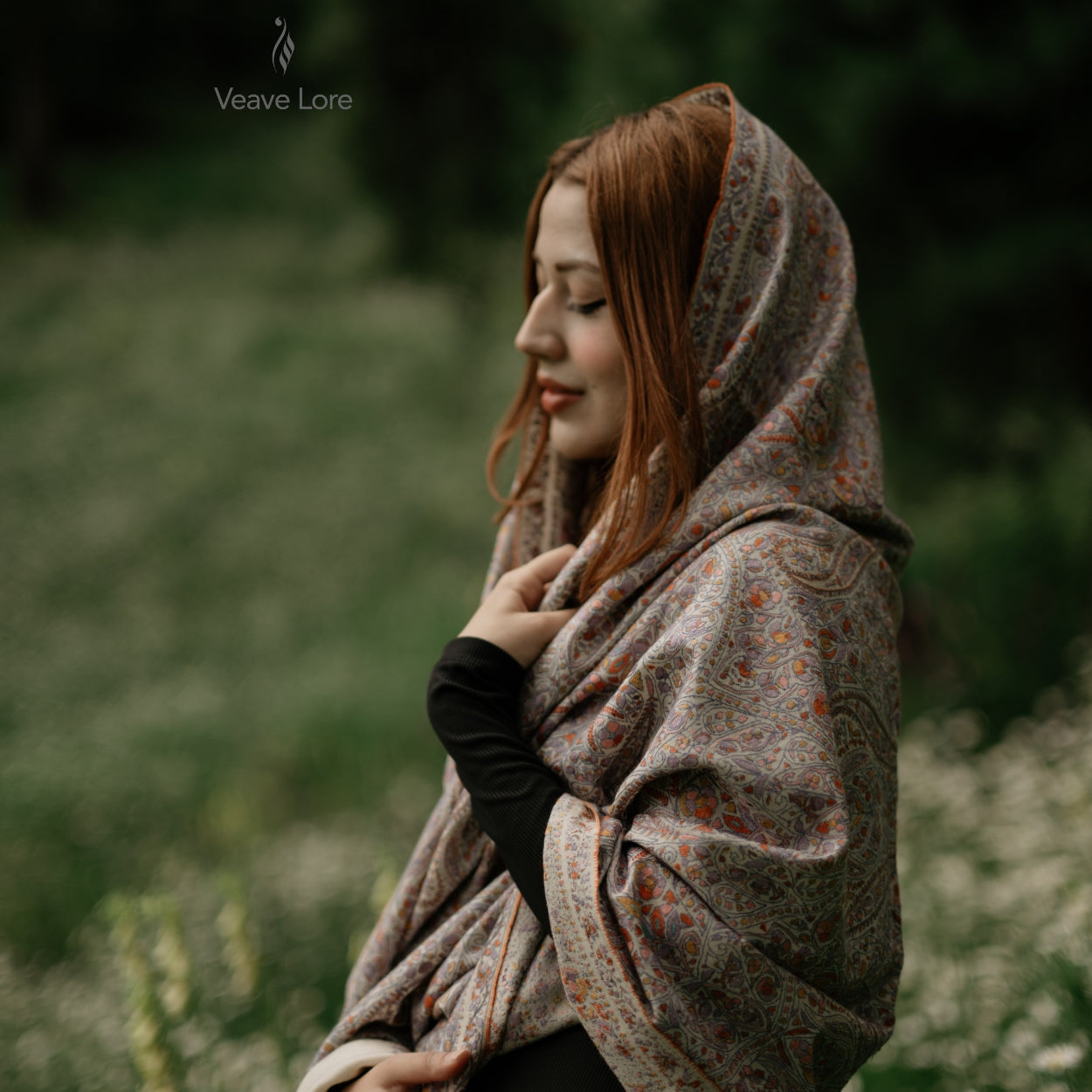
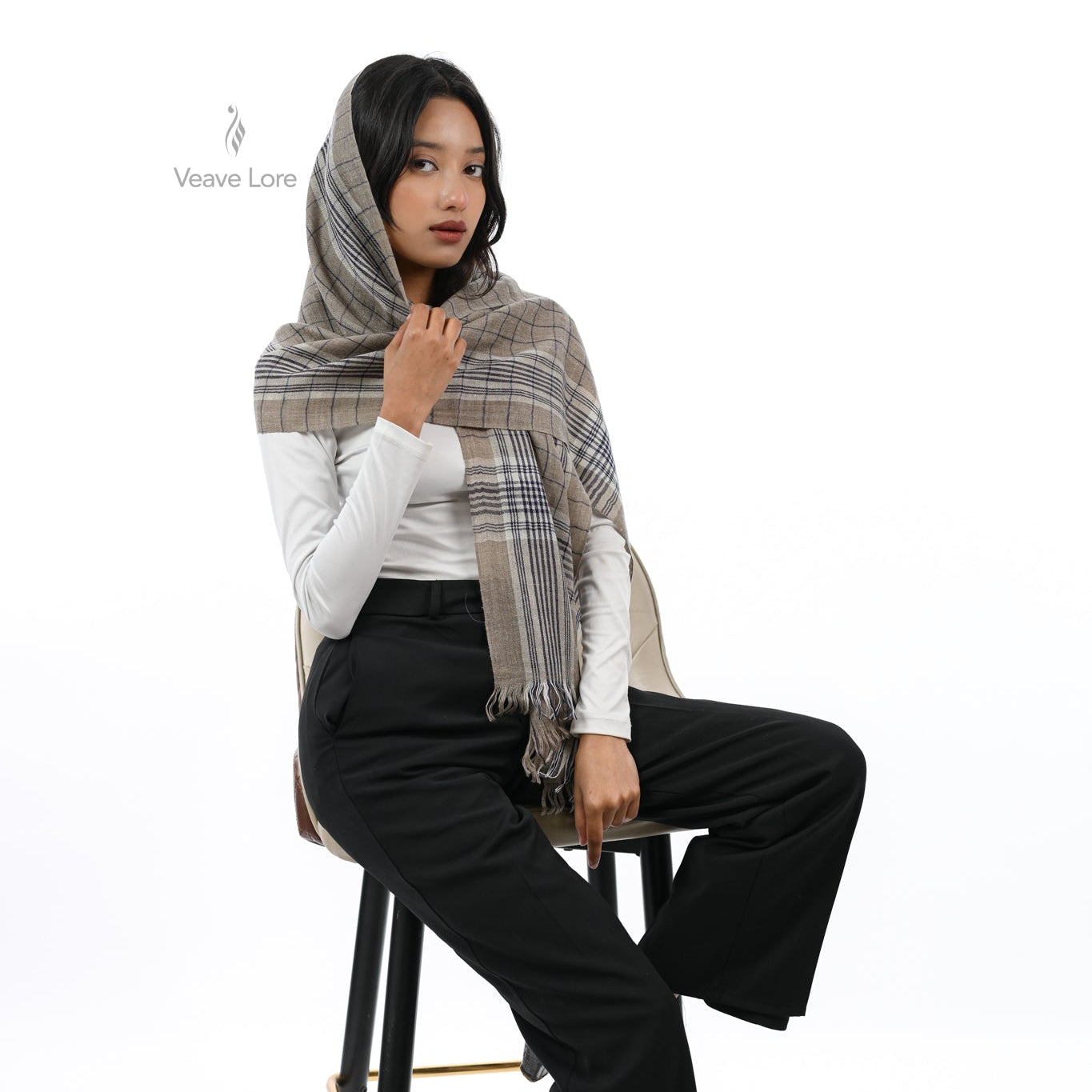
The Kashmiri Pheran Has Never Stopped Being Winter's Answer
Every culture that survives a genuinely hard winter eventually invents one perfect garment for it, something so well suited to the cold that fashion cycles simply fail to dislodge it. In Kashmir, that garment is the Kashmiri Pheran, a long, loose robe that has been keeping people warm through Chillai Kalan, the forty hardest days of winter, for centuries, and shows no sign of being replaced by anything more modern.
What a Pheran Actually Is
A pheran is a long, unshaped robe, worn by both men and women, that hangs loosely from the shoulders rather than being fitted to the body the way a coat is. That looseness is not a design oversight. It is the entire point, since a pheran is meant to be worn over layers, and the air trapped between the layers underneath and the loose outer robe becomes part of the insulation itself. The word is believed to come from the Persian perahan, meaning robe, carried into Kashmir through the same centuries of Persian and Central Asian influence that shaped so much of the valley's textile history.
The Kangri Connection
No description of a pheran is complete without mentioning the kangri, a small earthenware pot filled with hot coals, carried inside a wicker casing and tucked under the pheran against the body. Together, the loose robe and the kangri form a kind of personal heating system, portable warmth carried from room to room and even outdoors, which explains why the pheran needed to stay as loose as it is. A fitted coat has no room underneath it for a kangri. A pheran was built with exactly that room in mind.
Fabrics Across the Seasons
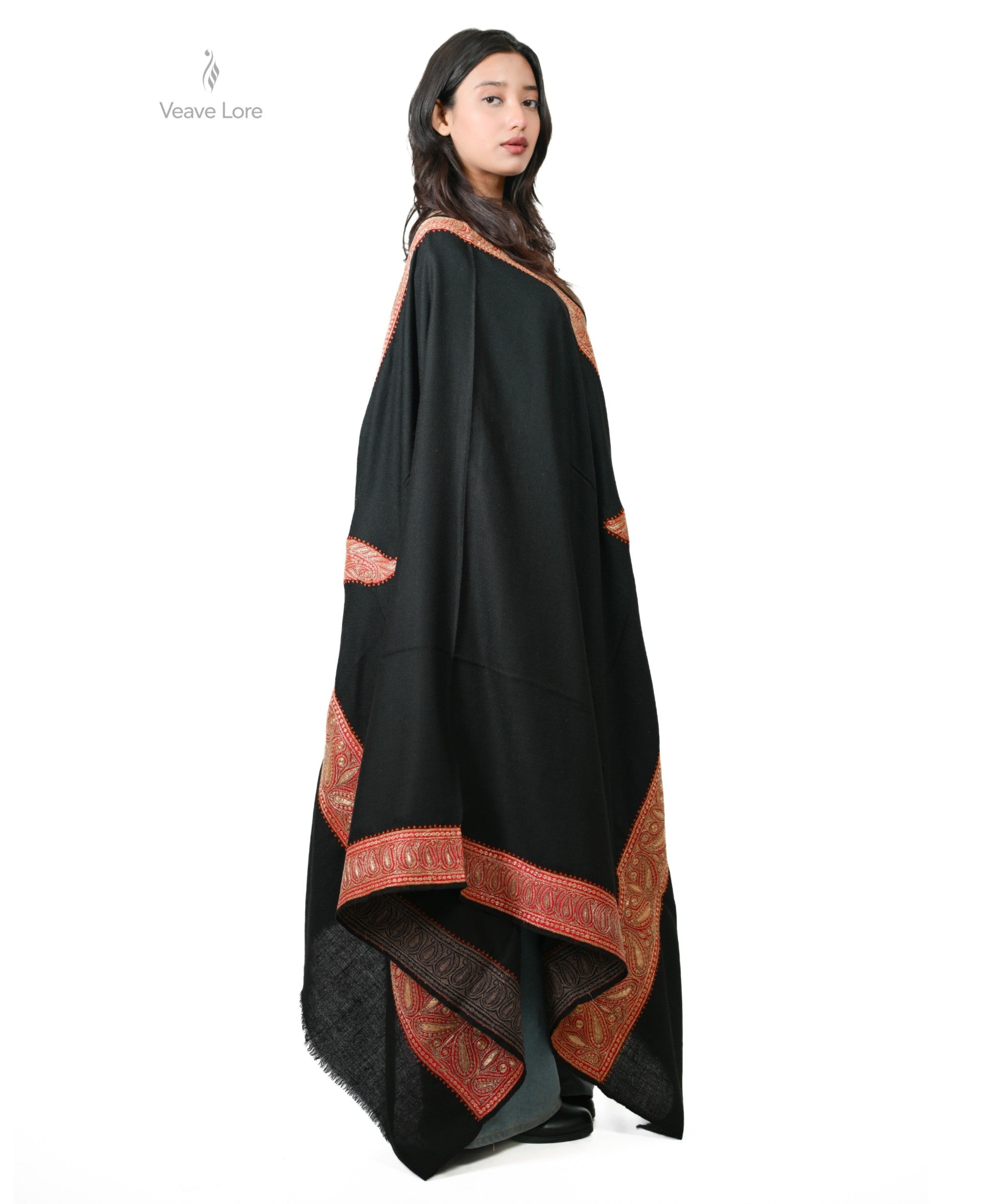
A pheran is not always the same garment made from the same cloth. Summer versions, sometimes called gabaa, are made in lighter cotton for the warmer months. Winter versions turn to heavier cloth, tweed, pattu, or raffal, chosen for warmth over refinement. Pashmina sits at the top of that range, reserved historically for the finest, most formal pherans, since the fibre's warmth to weight ratio makes it possible to build real insulation without the bulk that a heavier wool would add to an already loose, voluminous garment.
Embroidery on a Pheran
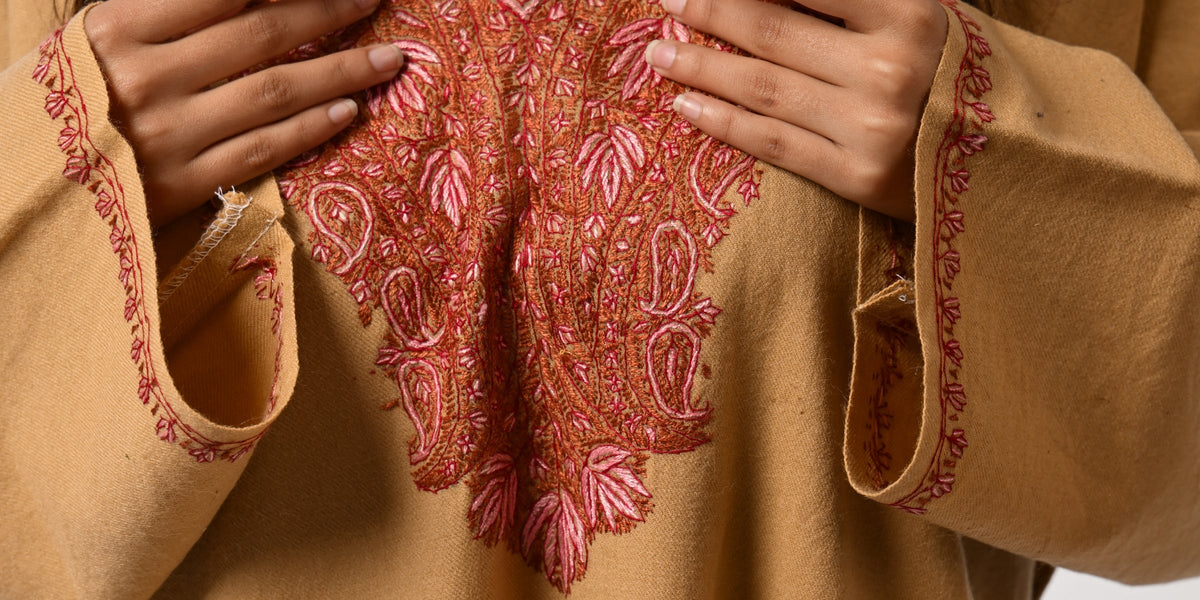
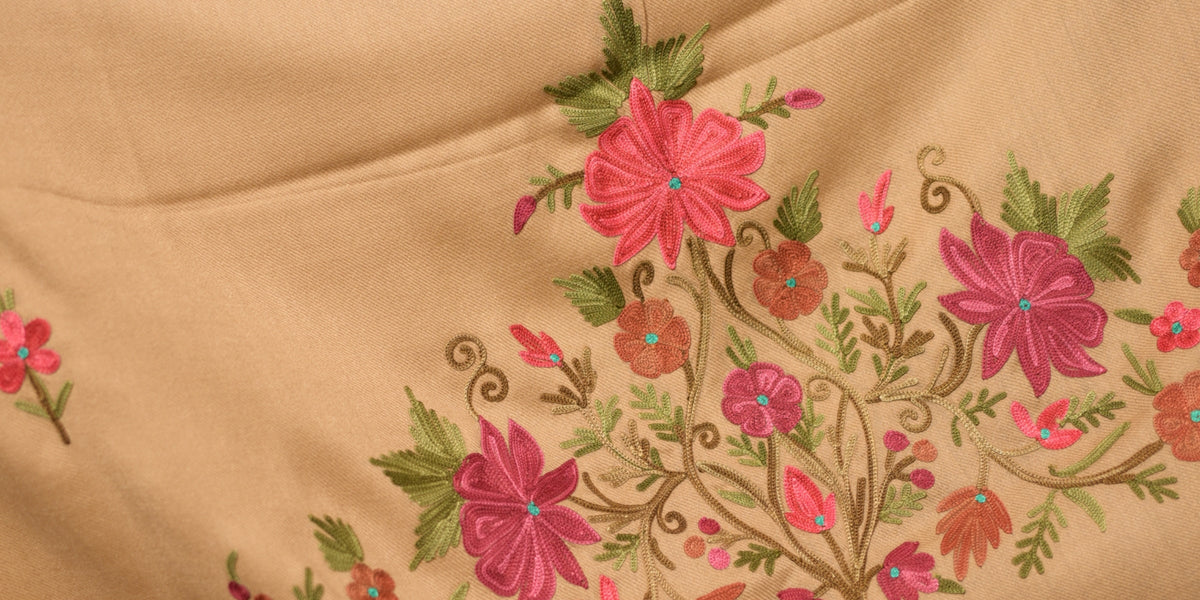
The collar, cuffs, and front opening of a pheran have traditionally carried the most decoration, since these are the parts of the garment that actually show when it is worn closed. Aari workand tilla embroidery both appear here regularly, concentrated where they will be seen rather than spread across the whole robe, a practical choice as much as an aesthetic one given how much fabric a full length pheran actually contains.
A Garment That Carries Identity, Not Just Warmth
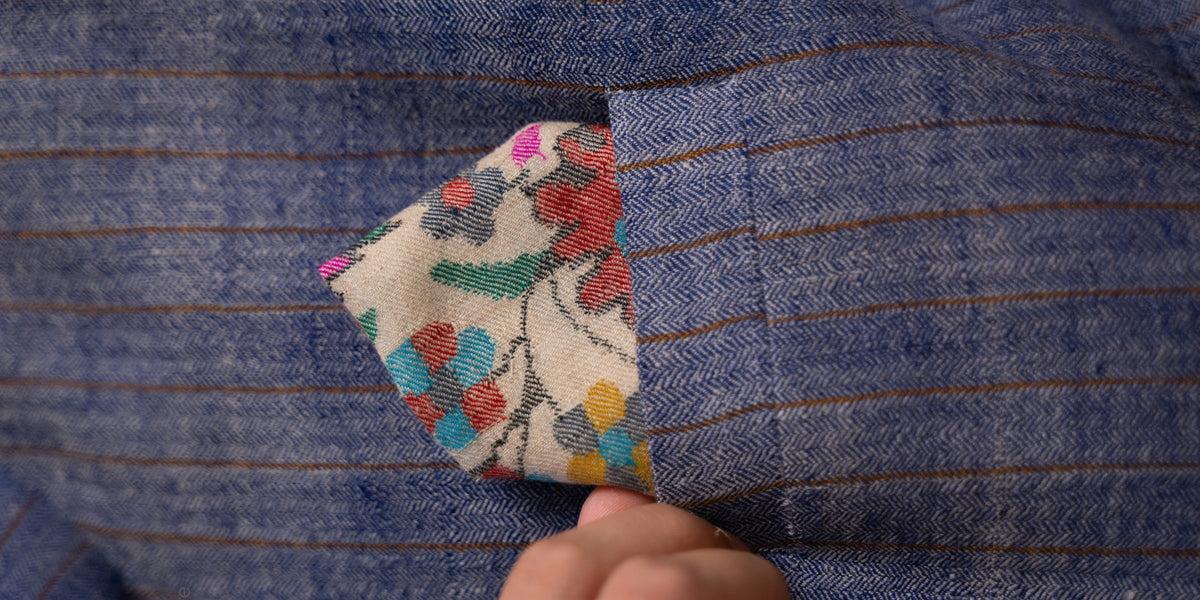
A pheran has never been purely functional in Kashmir, even though function is where its design clearly began. The way a pheran is cut, the depth of its pocket, the embroidery at its collar, these details have historically signalled region, community, and sometimes even which part of the valley a wearer came from, in the same quiet way that a particular weave or motif once signalled status on a formal shawl. Wearing a pheran today, especially a well made one, carries some of that history along with the warmth, whether or not the wearer is thinking about it consciously in the moment.
That layered meaning is part of why the pheran has proven so resistant to simply disappearing the way many traditional garments have elsewhere. Fashion trends come and go within a single generation, but a pheran answers a problem, Kashmir's genuinely brutal winter, that has not gone anywhere in centuries and is not likely to. A garment built around solving a real, recurring problem tends to outlast one built purely around current taste, and the pheran's long, largely unbroken presence in Kashmiri wardrobes is a fairly clean demonstration of that general rule.
There is also a quieter, more personal history carried in pherans that get handed down rather than bought new each winter. A pheran worn soft by years of use, patched perhaps at a cuff or reinforced at a seam, tends to be worn with a certain pride rather than embarrassment in households where the garment is still part of daily life, since its condition reads as evidence of real use rather than neglect. That attitude toward a well worn textile, valuing it more rather than less for showing its age, sits close to the same instinct that makes a decades old pashmina shawl more treasured than a brand new one in many families, a thread of the same philosophy running through two very different garments.
Wearing a Pheran Today
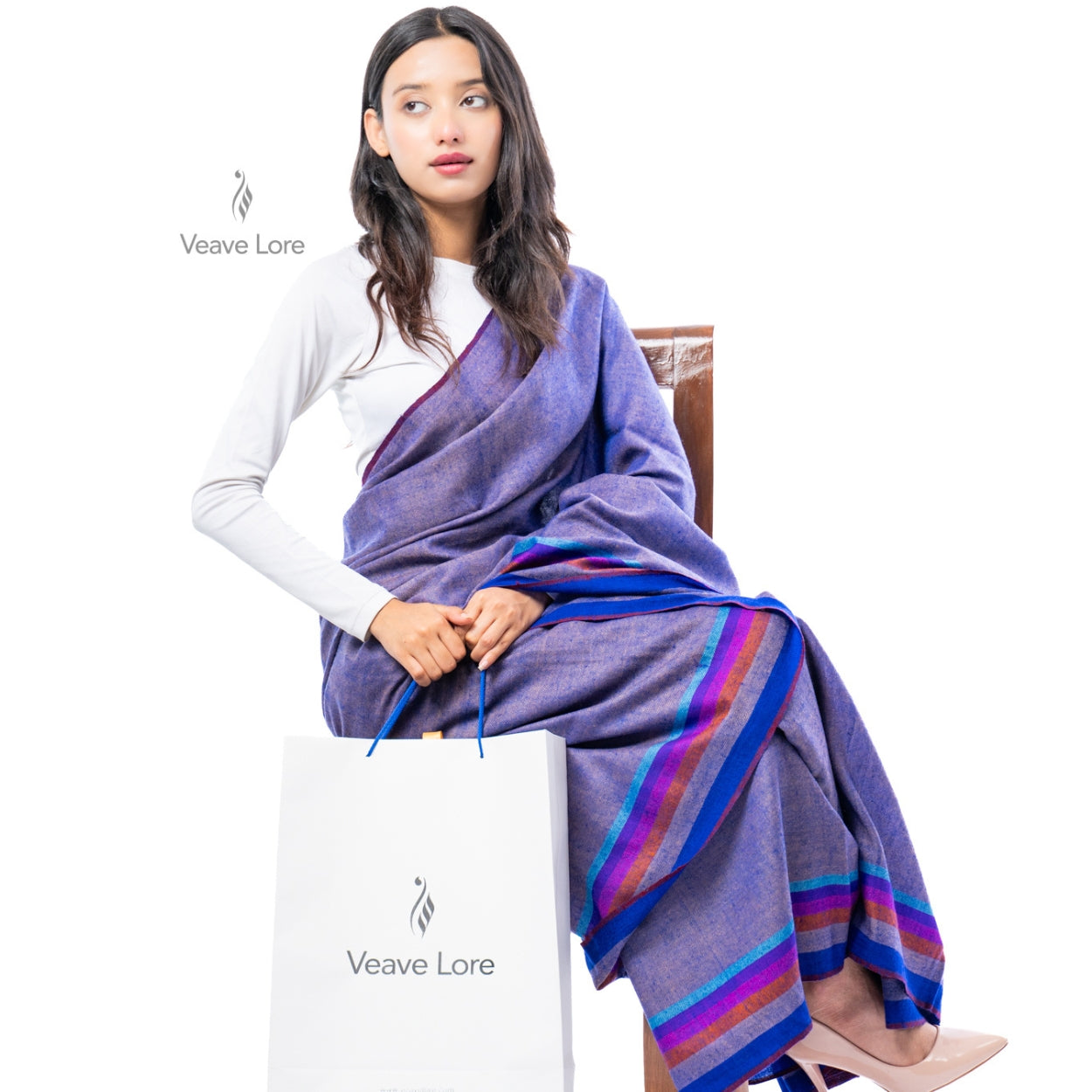
The modern pheran has adapted without losing its essential shape. Shorter lengths now pair easily with leggings or jeans rather than only traditional dress underneath, and the same loose silhouette that once needed a kangri works just as well today over a simple base layer with nothing more elaborate underneath it. For colder function or travel days, layering a pashmina shawl for women over a pheran adds a further layer of warmth without disrupting the garment's shape, since both pieces are built around the same idea of loose, uncut cloth doing the work that tight tailoring usually does.
There is also a growing number of people encountering the pheran for the first time not through family tradition but through travel or simple curiosity about Kashmiri craft, and the garment tends to reward that curiosity generously. A well made pheran, worn once through a genuinely cold evening, usually explains itself far better than any written description can, since the particular comfort of a loose, warm robe is something felt rather than easily put into words beforehand. For anyone building a winter wardrobe around pashmina pieces already, a pheran is a natural, slightly unexpected addition, extending the same philosophy of soft, generous warmth into an entirely different silhouette.
For anyone trying a pheran for the first time, sizing is worth thinking about differently than with fitted clothing. A pheran is meant to hang with room to spare, so choosing a size that feels generous rather than snug is usually the right instinct, since a tight pheran loses most of the insulating benefit of the loose layer of trapped air it is designed around. Worn this way, with a simple layer underneath and nothing fighting its natural drape, a pheran tends to feel less like a costume piece and more like what it has always actually been, a genuinely practical answer to a genuinely hard winter.
FAQs
Q. What is a Kashmiri pheran?
A long, loose, unfitted robe worn by both men and women in Kashmir, designed to be worn over layers and traditionally paired with a kangri, a portable pot of hot coals carried underneath it for warmth.
Q. Where does the word pheran come from?
It is believed to derive from the Persian word perahan, meaning robe, reflecting centuries of Persian and Central Asian influence on Kashmiri clothing.
Q. What is a kangri and how does it relate to the pheran?
A kangri is a small earthenware fire pot carried in a wicker casing, tucked under the pheran against the body. The garment's loose fit exists partly to leave room for it.
Q. Is a pashmina pheran only worn for special occasions?
Historically pashmina pherans were reserved for the finest, more formal versions of the garment, since pashmina's warmth relative to its weight suited a refined piece better than the heavier everyday fabrics used for daily wear.
Q. Can a pheran be worn with modern clothing?
Yes. Shorter modern pherans are commonly paired with jeans or leggings, and the garment's loose shape continues to work well layered over simple everyday clothing rather than only traditional dress.

Written by Veave Lore

Leave a comment
This site is protected by hCaptcha and the hCaptcha Privacy Policy and Terms of Service apply.