



How Are Kashmiri Pashmina Shawls Made: A Step-by-Step Process
Transforming raw pashmina wool into a breathtaking Kashmir shawl is a slow, painstaking process that requires skill and artistry at every stage. For generations, Kashmiri artisans have guarded the secrets of this craft, developing specialised techniques to handle one of the world’s finest fibers. In this blog, we will step into a weaver’s workshop and a spinner’s courtyard to see how pashmina shawls are made.
From the moment the fluff of wool is combed from a goat to the final flourish of a needle finishing a design, the journey is one of dedication, dexterity and an almost spiritual patience – truly an “act of worship, a true labour of love.”
From Fiber to Shawl: The Making Process
Making a pashmina shawl involves multiple stages, each often handled by a different set of artisans. Here is an overview of the traditional process:
1. Sorting and Cleaning
Once the pashm (the fine undercoat wool) arrives in Kashmir from high-altitude goats, mainly the Changthangi or Ladakhi goats found at 14,000 ft in Ladakh, it is carefully cleaned. Artisans pick out impurities and separate the soft pashmina fibers from coarser outer hairs. The raw pashm at this stage is a matted, greasy mass mixed with dirt, dander, and coarse hairs. It hardly looks like something that could become a luxurious shawl.
Traditionally, this work is done by hand, although modern dehairing machines are used in some units today for efficiency. However, hand-cleaned fiber is still considered superior in quality due to the minimal damage inflicted on the delicate fibers.
2. Spinning
Next, the women of Kashmir typically take on the task of spinning. Using a simple wooden spinning wheel called a yinder, they spin the pashmina fibers by hand into ultra-fine yarn. This requires immense skill, the yarn must be consistently thin yet strong.
In Kashmir, a common proverb says a good spinner has “fingers of iron and heart of wax.” Traditionally, girls learned to spin from their mothers and grandmothers, mastering the touch and tension required to work with such fine fiber. A single shawl’s yarn might take up to 250 hours of spinning time.
The spun yarn, composed of two or three-ply threads for strength, is usually left its natural off-white color or occasionally dyed at this stage.
3. Dyeing
If the shawl is to have colored patterns, the pashmina yarn is dyed before weaving. Kashmiri dyers historically used natural dyes:
- Indigo for blues
- Madder root for reds
- Saffron or turmeric for yellows
- Walnut bark for browns
- Cochineal for rich crimsons
While azo-free chemical dyes are now common due to their colorfastness and range, natural dyeing techniques are being revived by eco-conscious artisans and buyers.
After dyeing, hanks of yarn in various colors are hung to dry. Each hue will later be woven or embroidered into the shawl’s design.
4. Weaving
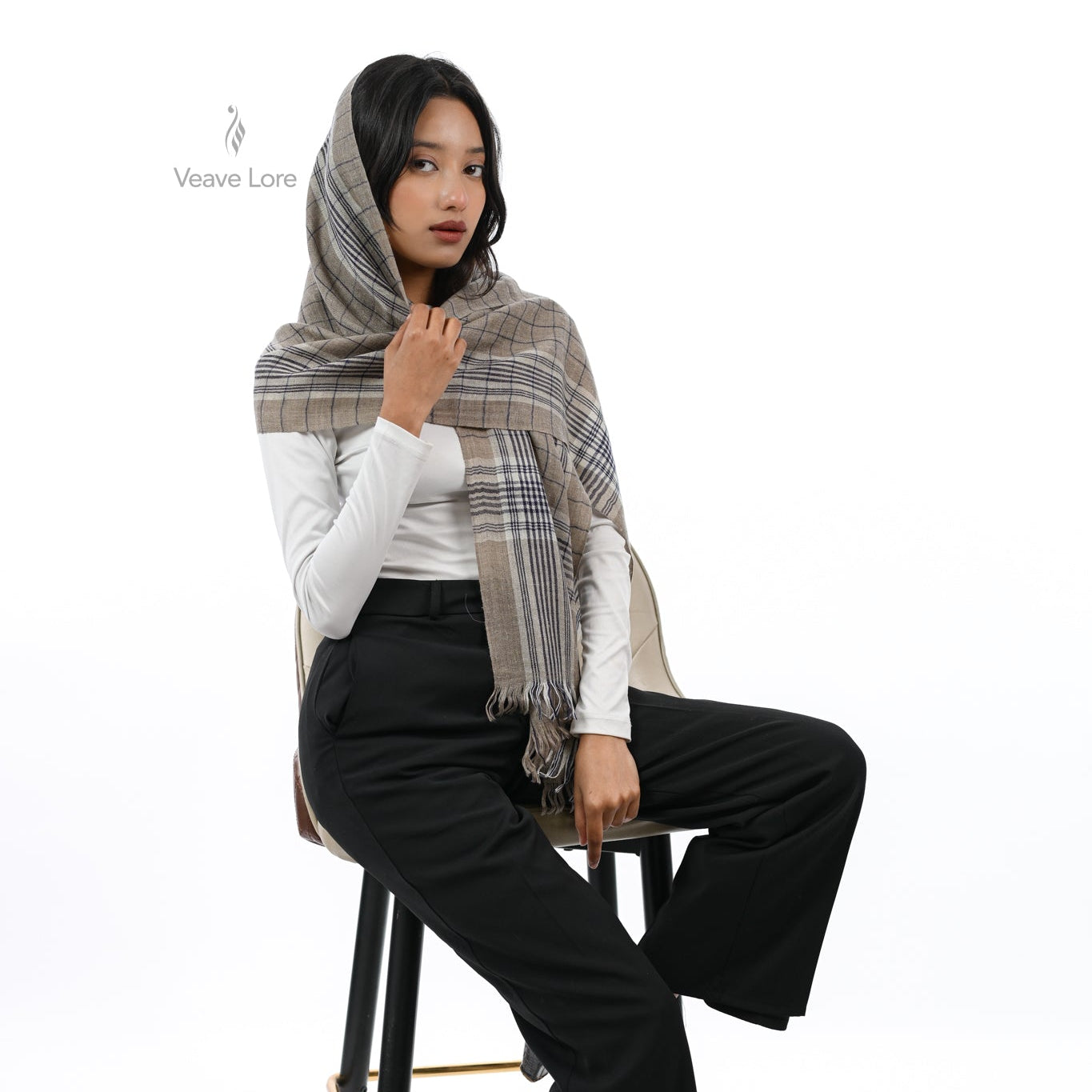
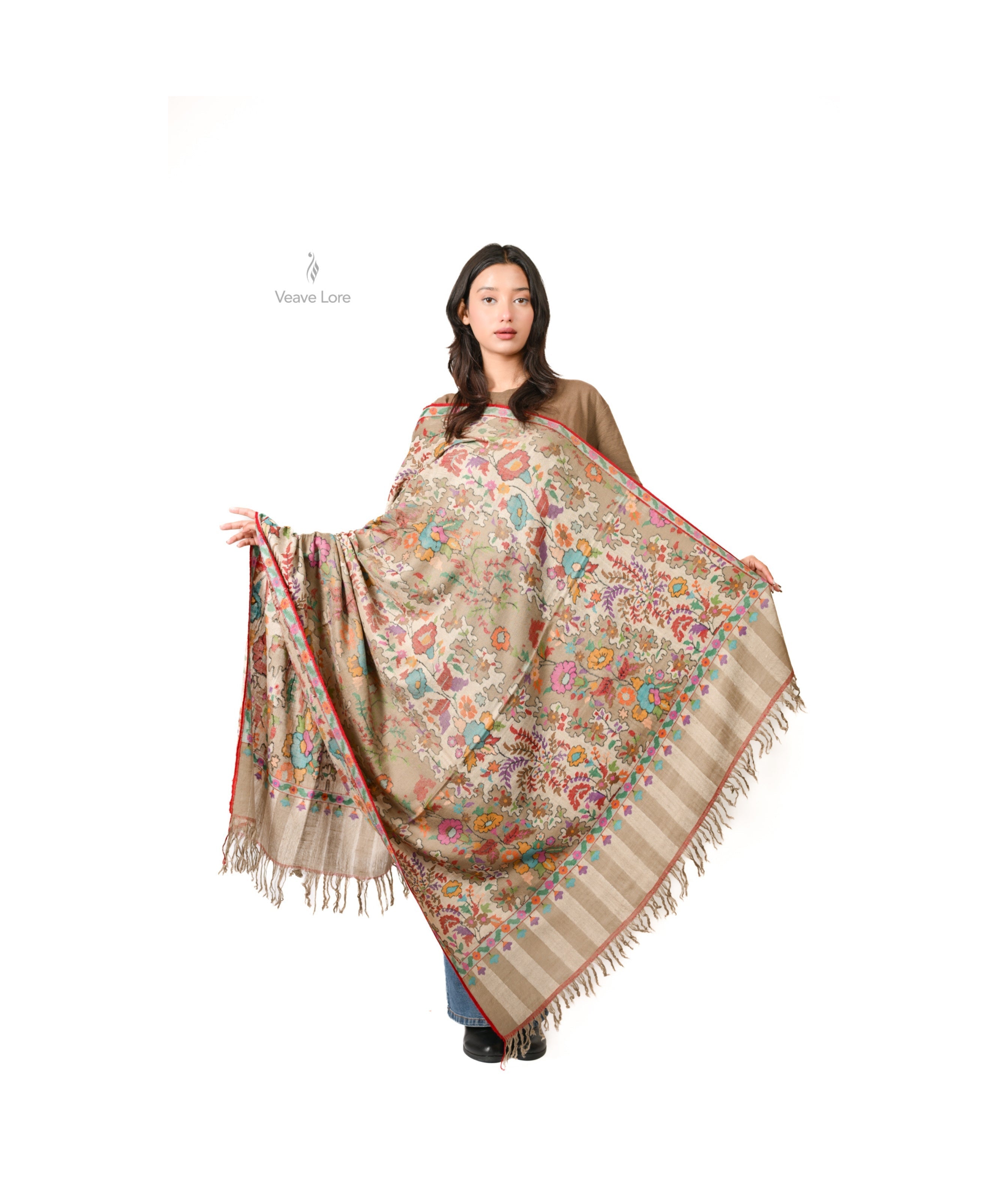
Weaving is the heart of the process, where the true artistry happens. Kashmir shawls are woven on traditional pit looms. The most renowned type of weaving is the kani (or twill-tapestry) technique.
In a modest room, often lit by a single window, two weavers sit side by side at a horizontal loom. They interlace the weft threads (horizontal yarn) into the warp threads (vertical yarn) based on a coded pattern called Talim. Instead of a single shuttle, kani weavers use dozens of tiny wooden bobbins (kanis), each wound with different colored yarn.
This technique is labor-intensive – a complex patterned shawl may take 6 to 18 months to complete. Weaving is done in a 2/2 twill structure, giving the shawl a subtle diagonal texture and strength. The hallmark of kani weaving is the mirror-image design on both sides of the shawl.
Some shawls are woven plain and then handed over for embroidery, instead of carrying the pattern in the weave.
5. Embroidery and Finishing
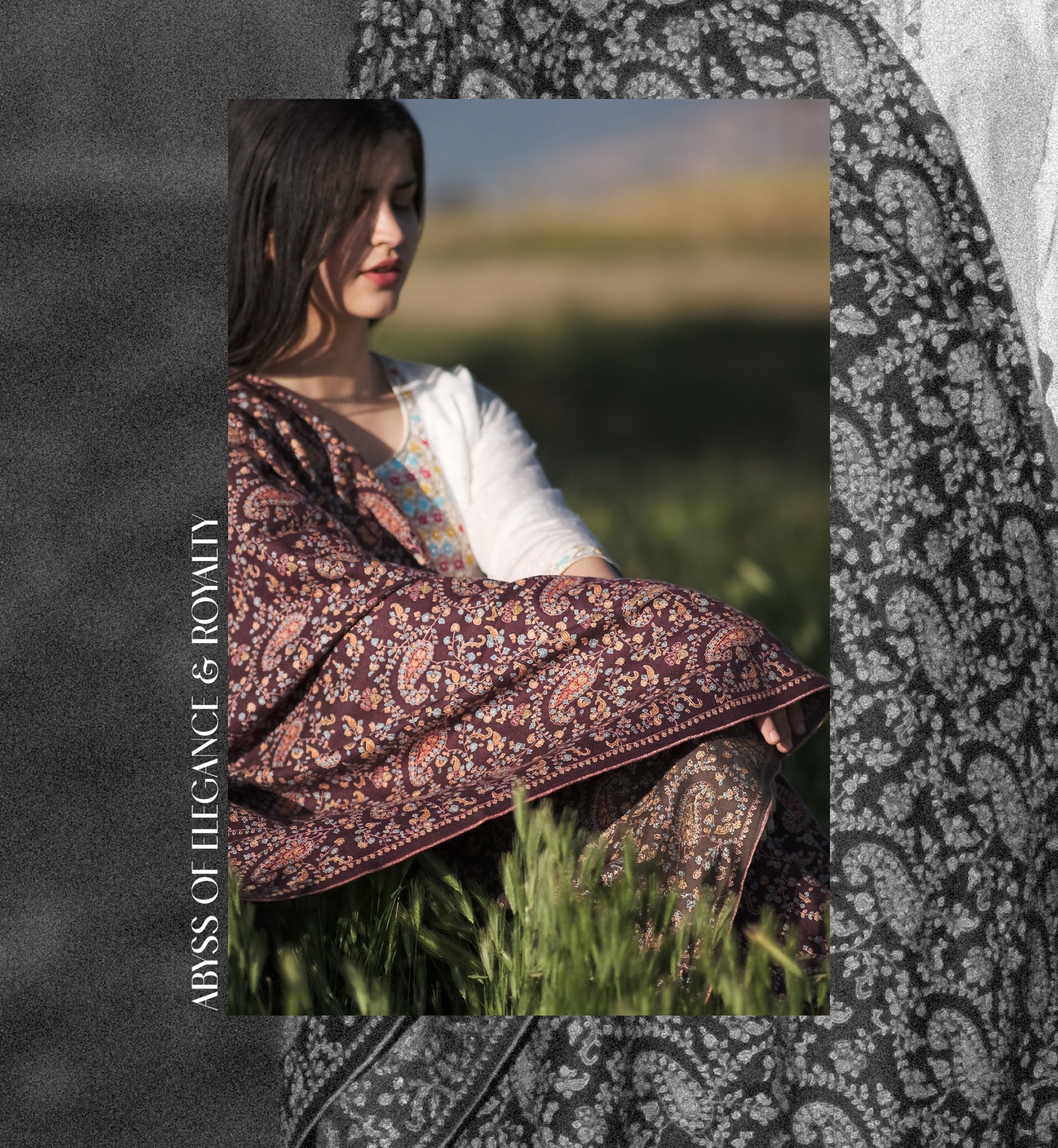
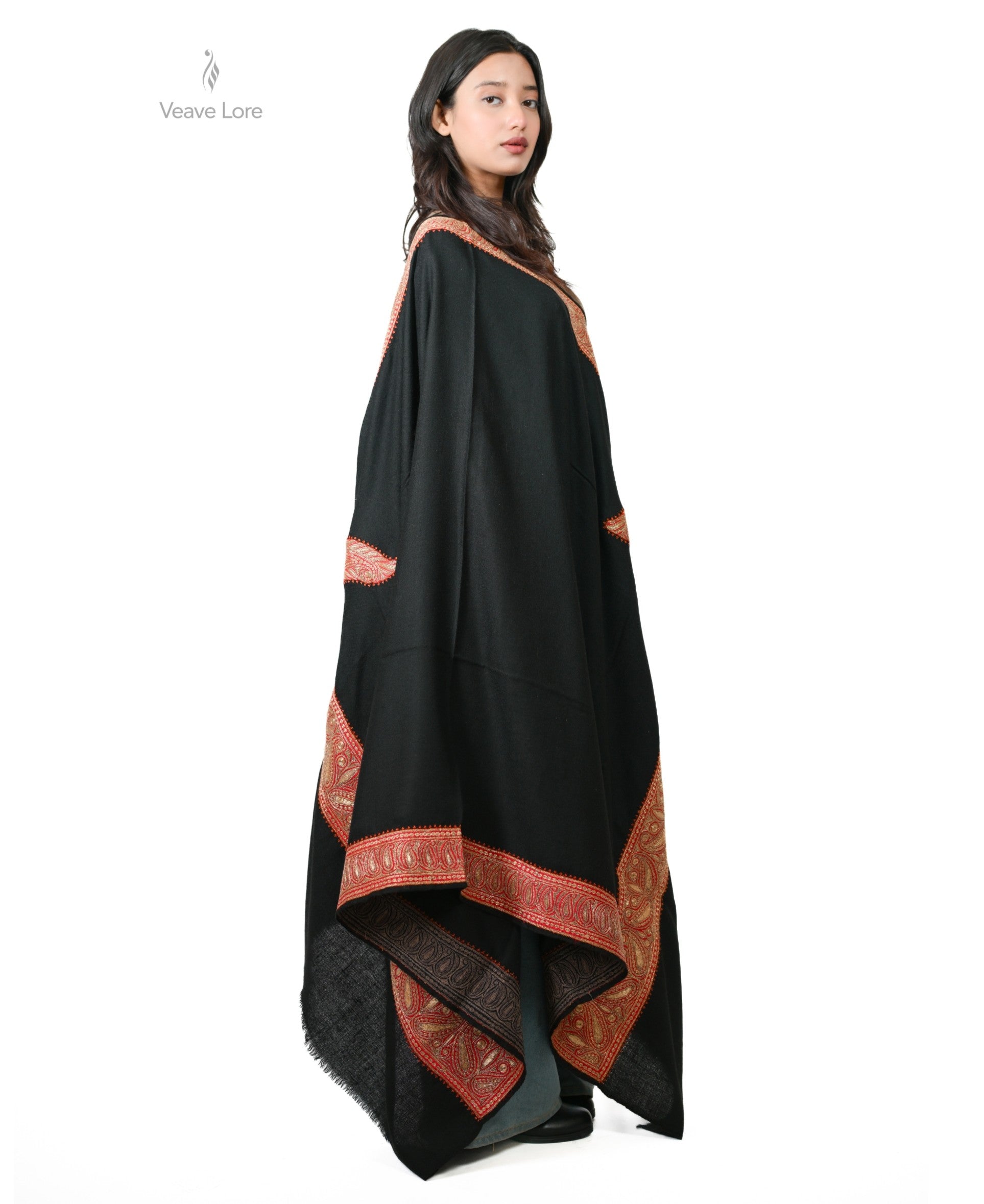
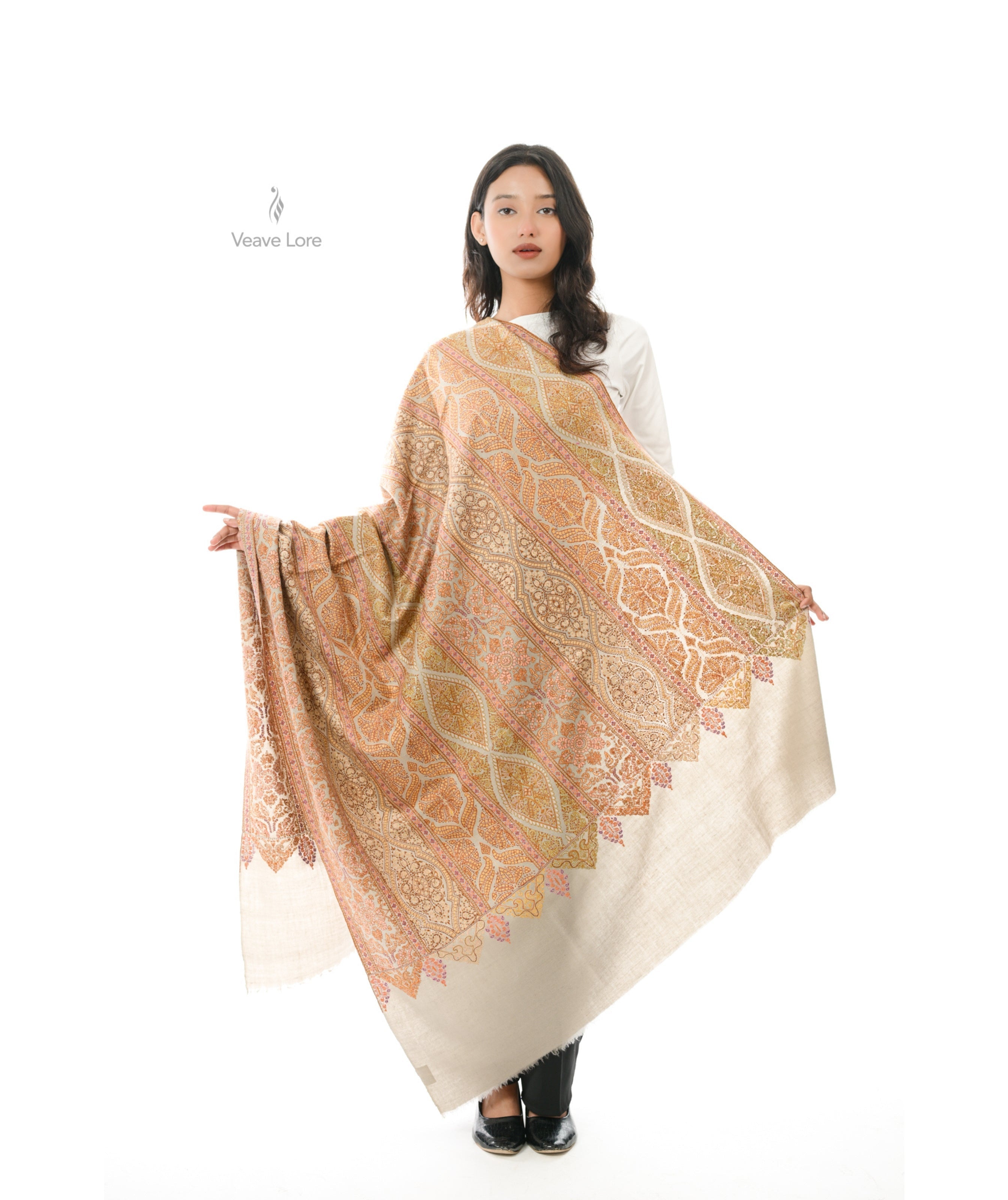
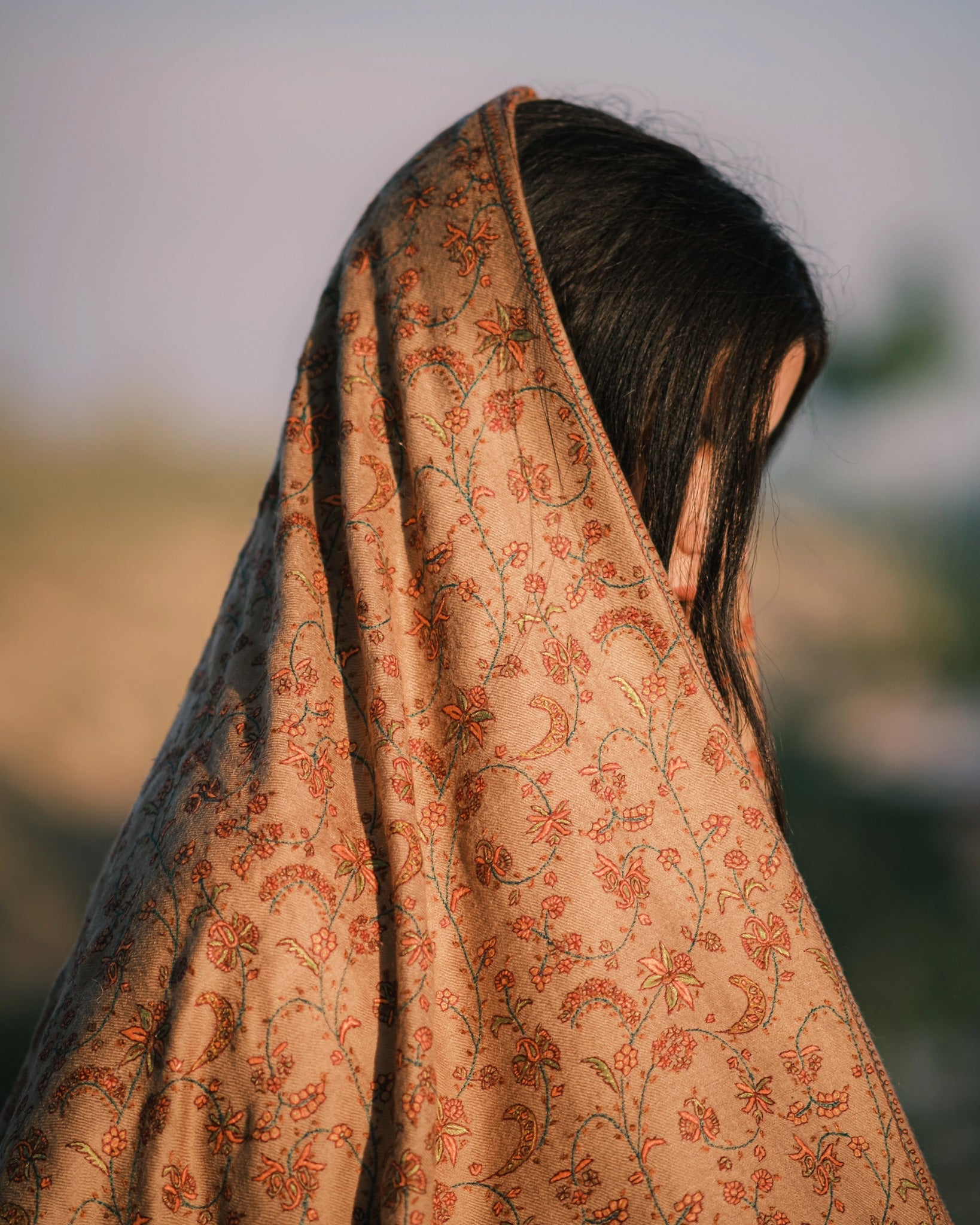
Many Kashmir shawls showcase exquisite embroidery, known as sozni work, instead of woven motifs. Skilled embroiderers (often men) use fine needles threaded with silk or wool to stitch elaborate, symmetrical motifs like paisleys, florals, and creepers.
There are also other styles like:
- Tilla work – metallic embroidery
- Paper mache – embroidery resembling papier-mâché patterns
- Aari embroidery – done with a hooked needle for chain-stitch effects
Fully embroidered shawls are called Jamawar, with dense needlework that can take several months. After this, shawls are gently washed, stretched on wooden frames (known as 'tashnaar'), dried, and finally hemmed or fringed.
In earlier times, shawls carried the official mark of the Kashmir Shawl Department – a seal of authenticity and taxation during the Dogra rule and British colonial period.
The Human Touch: Artisans Behind the Craft
What makes the Kashmir pashmina shawl extraordinary is the human touch at every stage. There’s no industrial shortcut that can replicate the quality of a truly hand-crafted shawl.
Historically, the division of labor was structured:
- Women: Spinning
- Men: Weaving and embroidery
- Naqqash: Designers who drew the pattern
- Rafoogars: Skilled menders who made invisible joins
- Talim-gurus: Pattern translators for weaving
A single shawl might involve 40 to 50 people, each contributing to a step in the process. Though pashmina shawls fetched high prices in Mughal courts and 19th-century Paris salons, artisans were often underpaid and exploited, especially spinners and weavers.
Weavers worked long hours under dim light for meager wages. But despite hardships, artisans took immense pride in their work. There’s an old saying:
“The soul of the weaver remains woven in the shawl.”
When we touch an authentic pashmina, we are in quiet conversation with the hands that made it.
Preservation of an Art Form
The techniques used in making Kashmir shawls have been recognized by UNESCO as intangible cultural heritage. Several efforts are underway:
- Craft schools in Srinagar
- GI certification (Geographical Indication) for Kashmir pashmina
- Revival of natural dyeing
- Branding with artisan names or QR codes to ensure traceability
While some modern interventions like fiber-testing labs, dehairing machines, and quality certification have helped protect authenticity, the core process remains human-powered.
Buying a genuine handwoven Pashmina is not just a fashion statement but a vote for heritage preservation, for livelihood and for craftsmanship in its purest form.
Conclusion
The making of a Kashmiri Pashmina shawl involves a lot of skills. It is a process that can neither be rushed nor mass-produced without loss of soul and quality. These shawls are not merely pieces of clothing but they are living legacies, lovingly made and historically significant.
Every thread tells a story – of snow-covered pastures in Ladakh, of dimly lit karkhanas in Srinagar, and of fingers that have mastered centuries-old secrets. Owning one is owning a part of Kashmir’s cultural heartbeat.
FAQs
1. What is the difference between Pashmina and Cashmere?
While both are derived from the undercoat of goats, Pashmina comes exclusively from Changthangi goats of Ladakh, and is finer and softer. Cashmere can come from different breeds globally and may be machine-spun.
2. How can I identify genuine pashmina?
Genuine pashmina is ultra-soft, light and warm. Look for GI tags, artisan labeling, and avoid overly glossy or stiff shawls which may indicate synthetic blends. A burn test (done only on samples) can show if it’s natural fiber.
3. Why is Pashmina so expensive?
Because it involves:
- Raw material from high-altitude goats
- Extensive manual labor by up to 40 artisans
- Months of handwork, weaving and embroidery
The price reflects the skill, time and rarity involved.
4. Is machine-made Pashmina available?
Yes, but it’s not authentic Pashmina. Machine-made shawls lack the softness, finesse and soul of handwoven ones.
5. Can pashmina be worn in summer?
Yes! Genuine pashmina is highly breathable and temperature-regulating, making it suitable even for spring and cool summer evenings.
6. How do I take care of my Pashmina shawl?
- Dry clean only
- Store folded in muslin cloth
- Avoid hanging (can distort shape)
- Keep away from perfume, mothballs and sunlight
7. Are all pashmina shawls made in Kashmir?
Not necessarily. Some are made elsewhere using imported fiber. However, only those made using traditional Kashmiri techniques from Ladakhi pashm qualify as true ‘Kashmir pashmina.’

Leave a comment
This site is protected by hCaptcha and the hCaptcha Privacy Policy and Terms of Service apply.